
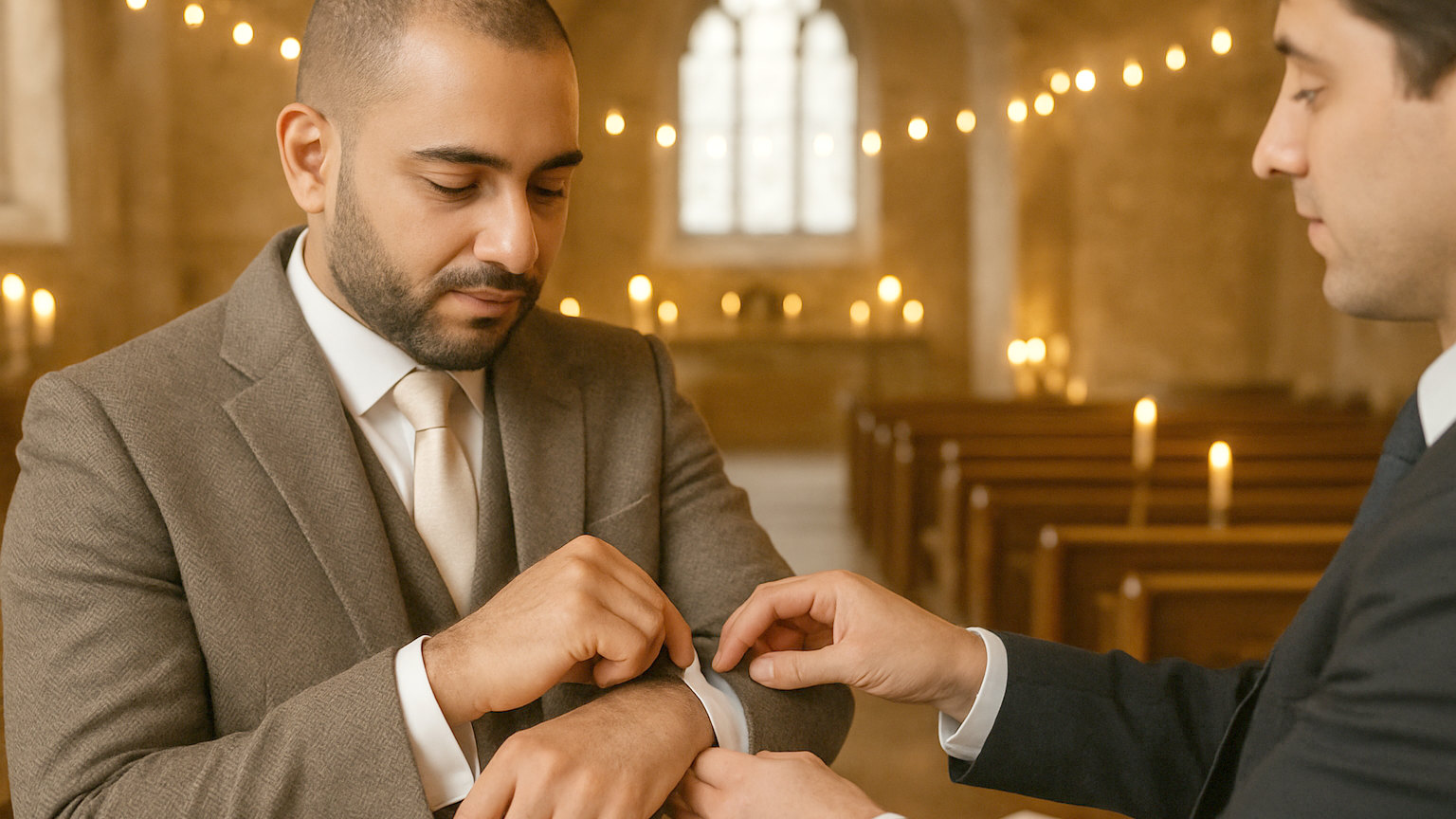
A celebrant writes and conducts a ceremony built around the two of you, with no restrictions on content, location or length. It is the most flexible option available and in most of the United Kingdom it does not replace the legal step.
What does the process involve?
Meetings to talk about your relationship, your families and what you want the ceremony to say, followed by a written ceremony you review and approve before the day.
Expect at least one long conversation and several exchanges of drafts. The result is a script rather than a template.
What can it include?
Anything. Personal vows, readings of any kind, religious or secular content, family involvement, symbolic rituals, humour, and stories about the two of you.
It can happen anywhere, including at home, outdoors or somewhere with no licence, and it can last as long as you want.
Is it legally binding?
In England, Wales and Northern Ireland, generally not on its own. Couples complete a separate civil ceremony, usually a short register office appointment.
In Scotland the position differs, since celebrants there can be authorised to conduct legally binding marriages.
How does the two ceremony arrangement work?
A short legal appointment at a register office with two witnesses, held before or after the celebrant ceremony, sometimes weeks apart and sometimes the same week.
Some couples treat it as pure administration attended by nobody. Others make a small occasion of it. Both are entirely normal.
What is a humanist celebrant?
One accredited by a humanist organisation, conducting non religious ceremonies grounded in a humanist outlook. Independent celebrants are not tied to any organisation and will include religious content if you want it.
Ask which you are speaking to, since it affects what the ceremony can contain.
What does it cost?
A fee covering the meetings, the writing and the day itself, and it varies considerably by celebrant and region. Where a separate legal ceremony is needed, its fees apply too.
Ask what the fee includes, particularly rehearsal attendance and travel.
How do you choose one?
Meet or speak to two or three, since this is a person who will speak for twenty minutes about your relationship in front of everybody you know.
Ask to hear or read a full ceremony rather than extracts. Style varies enormously and you will know quickly whether it is right.
When should you book?
Six to twelve months out for a popular date, since good celebrants book up in the same way photographers do.
The writing happens in the final few months, so an early booking secures the person rather than starting the work.
What do they need from you?
Time and honesty in the meetings, since the ceremony is built from what you tell them. The more they have, the more personal the result.
They also need the venue details, the running order and to know who is doing what, so introduce them to the venue in advance.
Is it worth it?
If the ceremony matters to you as more than a legal formality, it is one of the better uses of money in a wedding budget.
Guests consistently mention celebrant ceremonies afterwards, which is not something they often say about the part of the day everybody assumed was fixed.
Do they attend a rehearsal?
Many do and some charge for it. Ask what is included, particularly if the ceremony involves several participants who need to know where to stand.
What do they need from the venue?
Access before the ceremony, a sound system or a microphone if the space is large, and to know where everybody will be standing.
Introduce them to the venue directly rather than relaying information. It saves a great deal of correspondence.
What should you ask before booking?
How many meetings are included, whether they attend a rehearsal, what happens if they are unwell, and whether travel is charged.
Speak to two or three before choosing. The right one becomes one of the more memorable parts of the day and the wrong one is twenty minutes you cannot repeat.


