
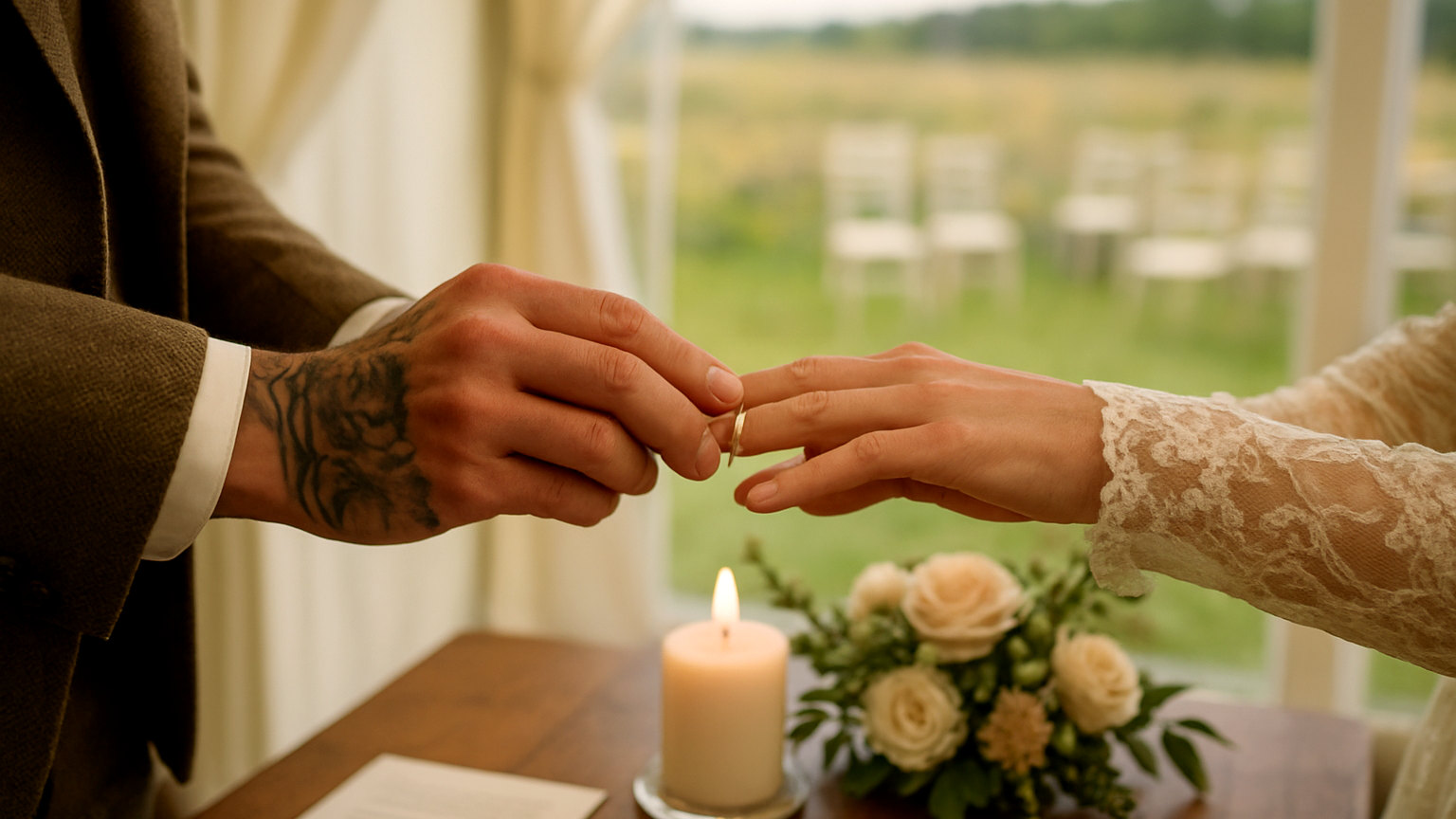
There are considerably more roles in a ceremony than most weddings use, and giving somebody one matters to them more than couples usually realise. Several cost nothing and require no confidence.
What roles exist?
Readings, walking somebody in, holding the rings, being a witness, ushering, handing out orders of service, performing music and giving a short welcome.
Beyond the ceremony there are speeches, running the day, managing suppliers and handling the clear down, all of which are genuinely useful.
Which roles suit nervous people?
Being a witness, holding the rings, ushering and handing things out. All are visible, all are meaningful and none requires speaking in front of anybody.
These are the roles worth offering to people who would decline a reading, and they are frequently the most appreciated.
Who should do a reading?
Somebody comfortable speaking, which is not always the person who most wants to. It is an excellent role for somebody not in the wedding party.
Ask rather than assign, and make it easy to decline. Some people find it genuinely difficult and would rather not say so.
How do you include children?
Walking in, carrying something, handing out orders of service or scattering petals where the venue permits it.
Keep the job short and have an adult responsible for each child. Expect it not to go to plan, which everybody finds charming rather than a problem.
How do you include grandparents?
A seat at the front, a corsage or buttonhole, a mention by the officiant, or being asked to be a witness, which is a genuine honour.
Where mobility is a consideration, arrange the seating and any help in advance rather than on the day.
What about remembering somebody who has died?
A line from the officiant, an empty chair with flowers, a photograph, a candle, a mention in the order of service or something of theirs carried with you.
Tell the officiant exactly what you want said and check the wording. It matters and it is easy to get slightly wrong.
How do you handle it emotionally?
Warn the people closest to that person beforehand so it does not catch them unprepared. A quiet word the week before is kind.
Keep it brief. A short mention lands more powerfully than a long one and is easier for everybody in the room.
What about people who cannot attend?
A recorded reading, a video link, a message read aloud or a photograph. All are common now and none seems unusual.
Test any live connection at the venue beforehand. A recording is more reliable and removes the risk entirely.
How many roles is too many?
A ceremony with eight participants becomes an event about the participants. Two or three additional roles is comfortable.
Spread the rest across the day. Speeches, the reception and practical jobs all offer ways to include people without lengthening the ceremony.
What should you tell them?
Exactly what they are doing, when, where to stand and how long it lasts, several weeks in advance and in writing.
Most people are delighted to be asked and anxious about getting it wrong. Clear instructions solve the second part entirely.
What about symbolic rituals?
Handfasting, candle lighting, sand ceremonies and similar all involve participants and add a few minutes each.
They are unrestricted at a celebrant ceremony and may not be permitted at a civil one, so check with the registrar first.
What matters most?
That people are asked rather than assumed, and told clearly what is involved. Being included badly is worse than not being included at all.
How many people can have a role?
Two or three in the ceremony itself, and as many as you like across the rest of the day. Speeches, practical jobs and the reception all offer ways in.
When should you ask?
Several months ahead, so people can decline comfortably and prepare properly if they accept.
A small role given with clear instructions is one of the more generous things you can do in the whole of wedding planning.


