
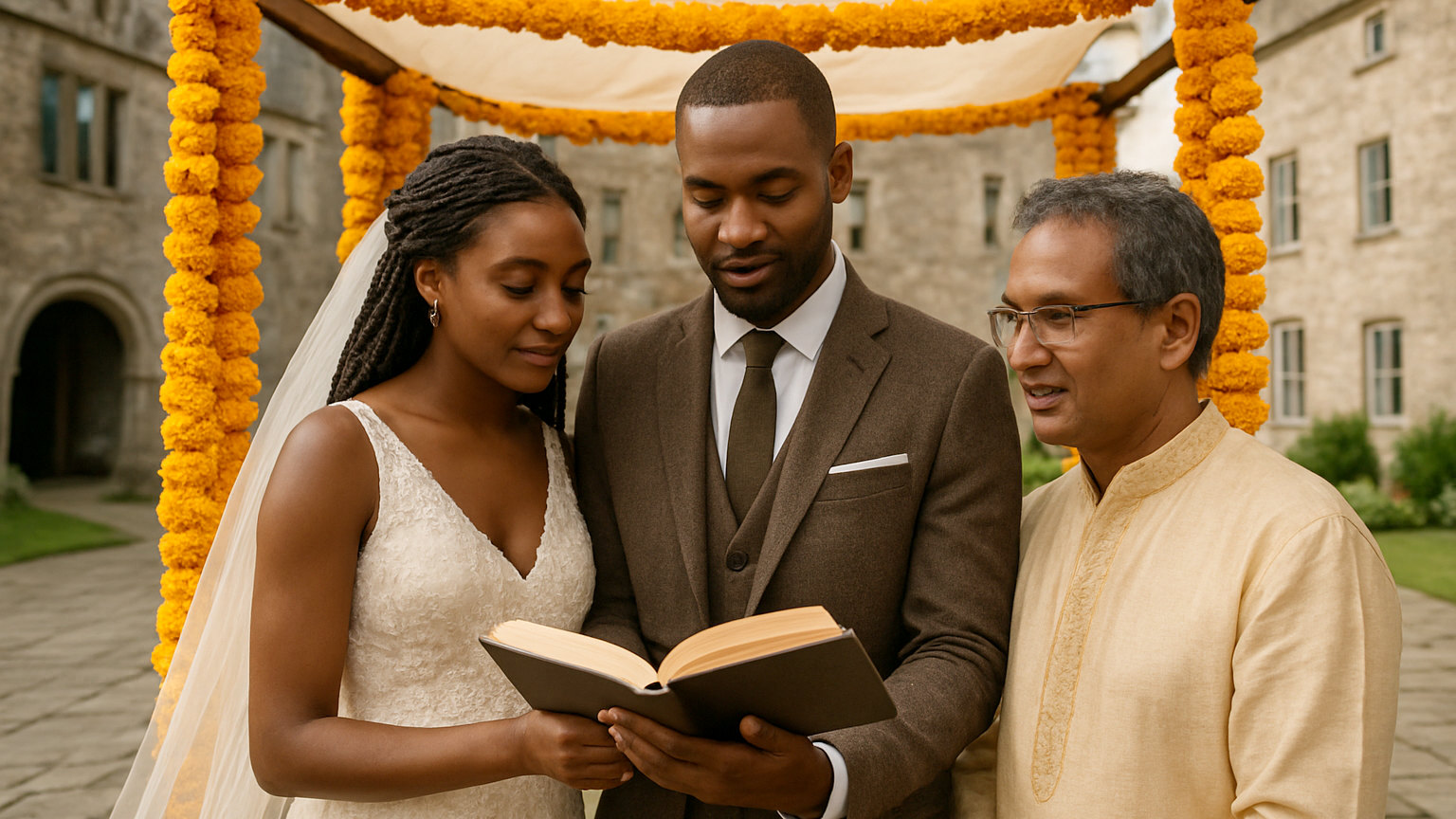
A reading does two jobs. It gives the ceremony a change of voice partway through, and it gives somebody a role without asking them to make a speech. Both are worth having.
How many should you have?
One or two. A short ceremony with three readings becomes mostly readings, and the pace suffers.
Two is comfortable in a ceremony of twenty five minutes or more, and one is plenty for anything shorter.
How long should they be?
Short. A minute to ninety seconds is ideal and three minutes is long when a hundred and fifty people are sitting still.
Read it aloud at proper pace before choosing. Text that seems brief on a page frequently is not.
Where do you find them?
Poetry, fiction, letters, song lyrics, film dialogue, children books and anything else that means something to you. There is no requirement for it to be about marriage.
A passage that means something to the two of you lands better than a well known wedding poem that means nothing to either.
What are the restrictions?
At a civil ceremony, no religious content, which includes references to God, scripture and hymns. Registrars will ask to approve readings in advance.
At a religious ceremony there may be requirements about content, so check with the officiant. A celebrant ceremony has no restrictions at all.
Do you need permission?
For civil ceremonies, submit the text to the register office ahead of time. It is a formality and it occasionally catches something you had not spotted.
Do it early rather than in the final fortnight, when a rejection leaves no time to find an alternative.
Who should read?
Somebody who will be comfortable, which is not always the person who most wants to. A reading in front of a hundred and fifty people is harder than it sounds.
It is also an excellent role for somebody who is not in the wedding party but whom you want to include.
How do you brief them?
Give them the text in a large clear font, printed, several weeks ahead, and tell them where to stand and when they are on.
Ask them to practise aloud. Almost everybody reads too fast when nervous, and being told this in advance is the single most useful instruction you can give.
What about a microphone?
Ask whether one is available and make sure the reader has used it before the ceremony. A reading nobody can hear is the most common ceremony failure.
Check that the venue has a microphone at all, since a surprising number of licensed rooms do not.
Can somebody read remotely?
Increasingly common where a relative cannot travel, either recorded in advance or joining by video. Both need testing at the venue beforehand.
A recording is more reliable than a live connection and it removes the risk entirely.
What if you cannot find one?
You do not need one. A ceremony with no readings is entirely normal and shorter, and it is better than including something neither of you cares about.
Alternatively ask the person reading to choose, which frequently produces something more personal than searching a list.
Should the couple choose them?
Usually, since they set the tone of the ceremony. Asking the reader to choose is a warm alternative and it produces something more personal.
Either way, read it aloud yourself before deciding. Text that works on a page does not always work spoken.
What makes a good one?
Something short, clear when heard once, and connected to the two of you. A passage that needs explaining is the wrong passage.
When should they be settled?
Two to three months out, which allows time for approval at a civil ceremony and for the reader to practise properly.
Who should hold a spare copy?
The officiant, so a reader who has forgotten theirs is not standing at the front without anything to read from.
Keep them short, choose something that means something, and brief the reader properly. That covers almost all of it.


