
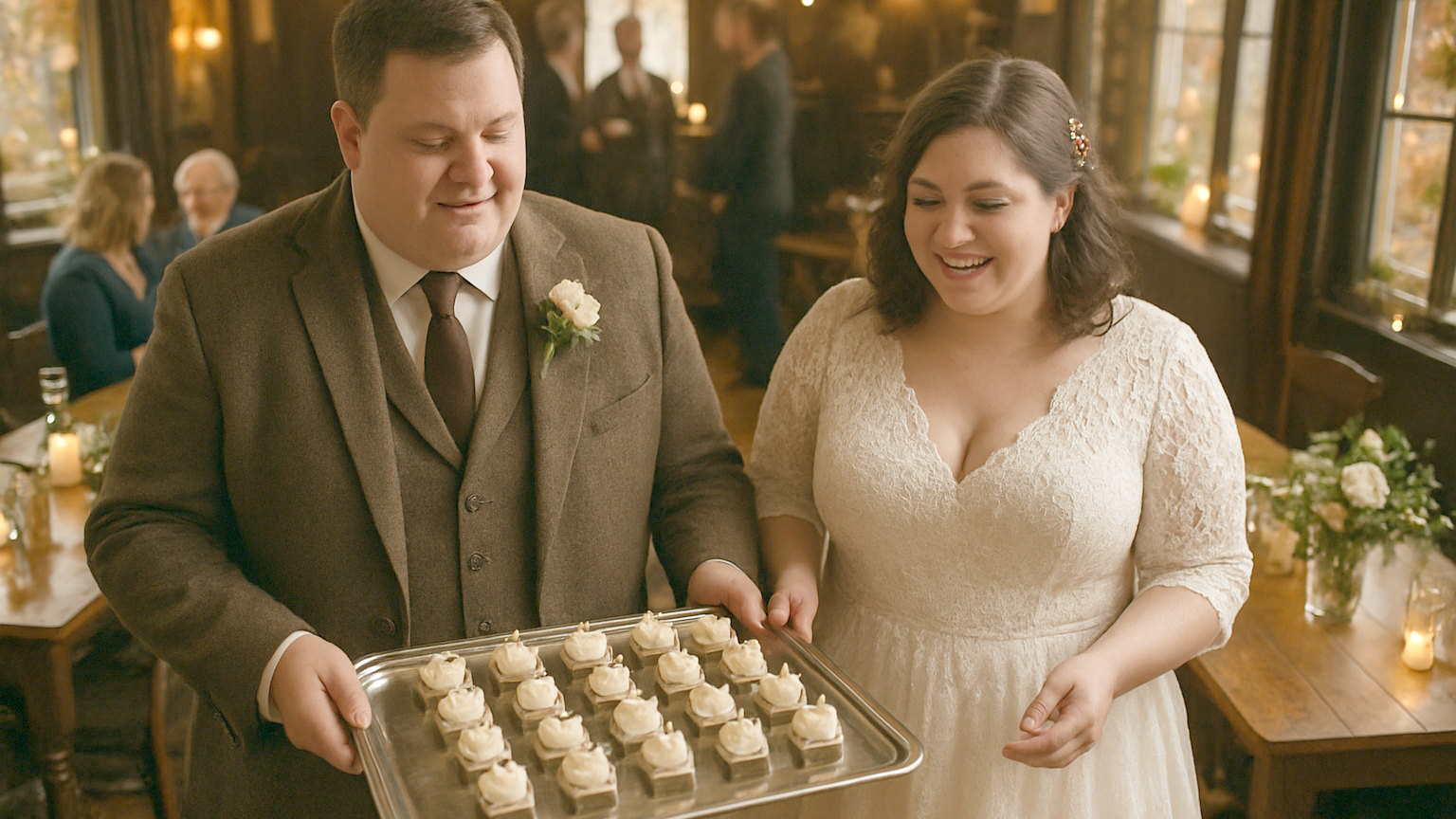
The wedding cake is the one catering item with no fixed job. It can be dessert, evening food, a decorative centrepiece or all three, and deciding which determines what you actually need to order.
What job should it do?
If it is dessert, you need enough for every guest and it removes a course from the meal. If it is evening food, the same. If it is decorative, it can be considerably smaller.
Decide this first, since it changes the size, the cost and whether you need anything else.
How big does it need to be?
Ask the maker to size it against the job rather than the guest count alone. A cake served as dessert needs full portions and one cut in the evening needs fewer.
Not everybody eats cake, particularly late at night after a full meal, so evening portions can be planned below the headcount.
What are dummy tiers?
Polystyrene tiers iced to look real, giving height without cost. Widely used and entirely invisible.
A tall cake with two real tiers and two dummies costs a fraction of four real ones and looks identical.
What is a cutting fee?
A charge some venues apply for cutting and serving a cake supplied by an outside baker, commonly one to seven pounds per guest.
Ask about it early, since at a hundred and fifty guests it can rival the cost of the cake itself.
What are the alternatives?
A cheese tower, which doubles as evening food. A stack of tarts, doughnuts or brownies. A single tier with a dessert table alongside.
All are common now and none reads as a compromise. A cheese tower in particular is popular and does two jobs at once.
Can it be inexpensive?
Yes. A plain supermarket or bakery cake decorated with fresh flowers costs a fraction of a bespoke one and nobody can tell once it is cut.
If the cake is decorative rather than dessert, this is one of the easiest savings available.
What about fresh flowers on it?
Common, and they need to be food safe and correctly prepared, so tell both the florist and the cake maker and let them coordinate.
Some flowers are unsuitable for contact with food, and a florist who knows the cake is being dressed will select accordingly.
When should it be ordered?
Three to six months out for a bespoke cake, and longer for a popular maker in summer. Tasting sessions are usually part of the process.
Confirm delivery and setup with the venue, since a tiered cake is assembled on site rather than delivered whole.
When is it cut?
Traditionally after the speeches or at the start of the evening, and it is largely a photograph. Tell the photographer and the venue when it is happening.
If it is being served, the kitchen needs it cut early enough to portion, which is worth agreeing rather than assuming.
What is the practical approach?
Decide its job, size it accordingly, check the cutting fee, and use dummy tiers for height if you want a tall cake cheaply.
Those four decisions cover almost everything about the cake and they can be made in a single conversation.
Who keeps the top tier?
Traditionally kept for a christening, which fewer people now do. A fruit cake keeps and a sponge does not, so ask the maker if you intend to.
Assign somebody to take the remaining cake home, since it is one of the more commonly abandoned items at the end of the night.
Does it need to be traditional?
Not at all. Cheese, doughnuts, tarts and a single tier are all common now and none of them requires explanation to anybody.
Decide what job it is doing and everything else about it follows from that one answer.
When is it delivered?
Usually on the morning, assembled on site, so confirm access and a stable table with the venue in advance.


