
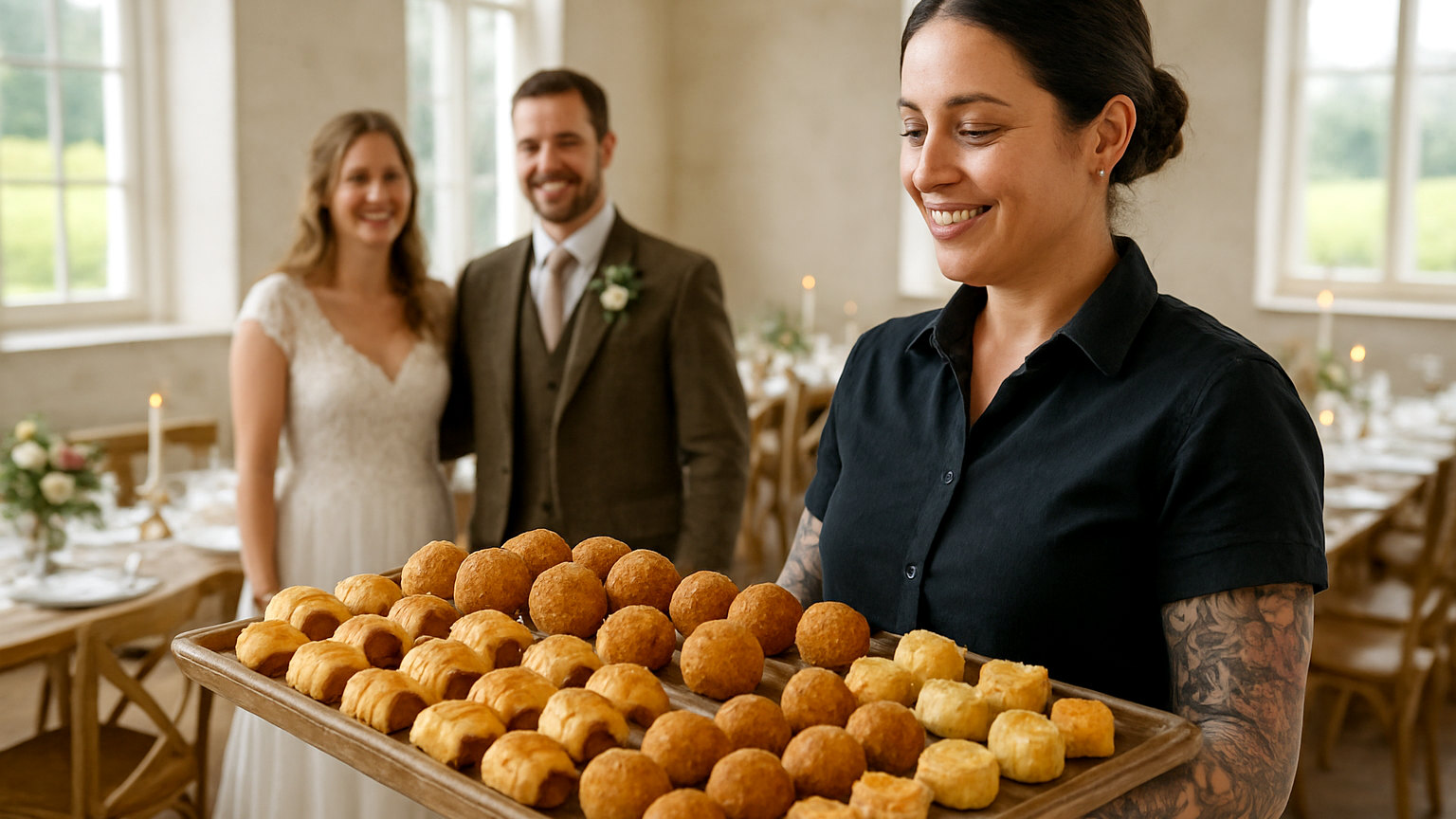
Evening food frequently feeds more people than the meal did, since evening guests have arrived and day guests have been drinking for eight hours. It also costs a fraction, which makes it one of the better value items in a catering budget.
What works at that time of night?
Simple, hot and easy to eat standing up. Bacon rolls, pizza, chips, sliders, a hog roast in a bun or a cheese table all work considerably better than anything elaborate.
Guests at ten in the evening want something substantial rather than something refined, and the simplest options are consistently the most popular.
How many will eat?
More than the day guest count, since evening guests have arrived and everybody else has been drinking. Numbers here are almost always higher than couples plan for.
Ask the caterer to base it on the total headcount rather than on the meal numbers.
When should it be served?
Usually around nine or half past, an hour or two after evening guests arrive and after the dancing has started.
Too early and nobody is hungry. Too late and people have already left or are past eating.
How is it served?
A buffet in most cases, or trays passed through the room. A queue at this point is less of a problem than at the meal, since guests are moving anyway.
Two serving points is worth it above about a hundred and twenty guests, since the whole room arrives at once.
What does it cost?
Commonly eight to twenty pounds a head depending on what is served, which is a fraction of the meal.
It is priced separately from the wedding breakfast in almost every case, so check whether it is in your package.
Can the cake do the job?
Yes, and it removes a separate catering cost. Cutting the cake and serving it as the evening offering is entirely conventional.
A cheese tower does the same thing and doubles as both the cake and the evening food, which is efficient and popular.
Do you need it at all?
If the wedding runs past about nine, yes. A room of guests who last ate at four and have been drinking since is not a happy room.
For a wedding finishing early, it is unnecessary. That is a legitimate format and it removes the cost entirely.
What about dietary requirements?
They apply here too and are frequently forgotten, since evening food is planned as an afterthought.
Tell the caterer the requirements for evening guests as well as day guests, and make sure there is something for everybody.
What is commonly missed?
Somewhere to eat it. A buffet with no tables or ledges means guests holding a plate and a drink with two hands and nowhere to stand.
Leave some tables in place after the meal, or provide high tables. It costs nothing and it makes the whole thing work.
What is the best value option?
Something hot, simple and substantial, served at the right moment, with somewhere to stand. Guests consistently mention late night food afterwards and it is among the cheapest catering you will buy.
Who is it for?
Everybody still there, which is usually a mixture of day guests who have been drinking for hours and evening guests who arrived recently.
Both groups want the same thing at that time of night, which is why simple options work best.
What should you confirm?
The headcount it is based on, the serving time and whether it is included in your package or charged separately.
What is the best value option?
Something hot and simple served at the right moment. It costs a fraction of the meal and guests consistently mention it afterwards.
Serve it hot, serve it late, and give people somewhere to stand while they eat it.
What is most often underestimated?
The quantity, since evening numbers include arrivals and everybody who has been drinking since lunchtime.


