
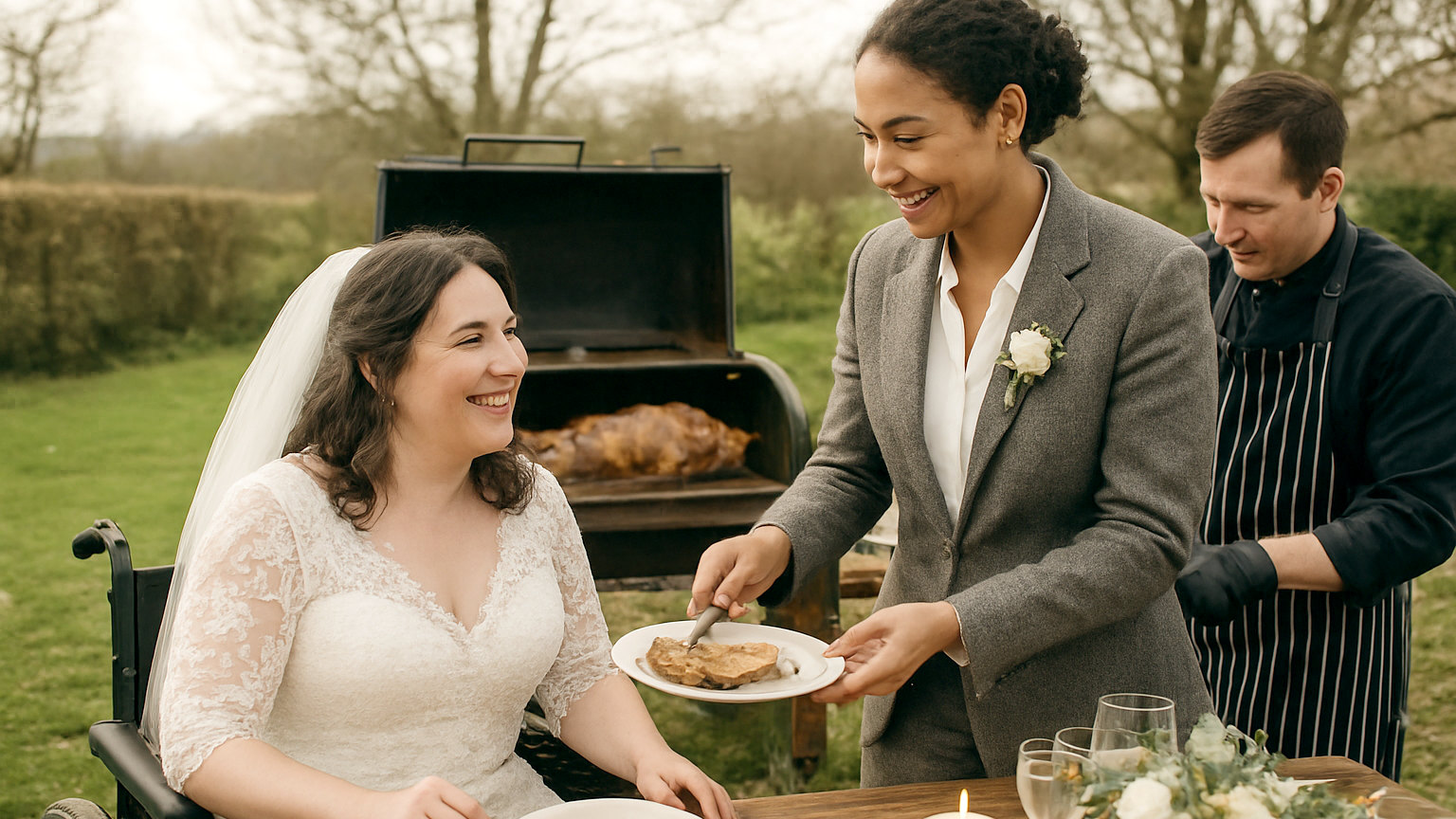
The main meal at a British wedding is called the wedding breakfast, which confuses people because it is usually eaten in the middle of the afternoon. The name is historical and the meal itself follows a fairly consistent pattern.
Why is it called breakfast?
Because it was historically the first meal after a fast preceding the ceremony, and the name has outlasted the practice by several centuries.
Nobody expects breakfast food. It simply means the main sit down meal of the day.
When does it happen?
Typically mid to late afternoon, following the ceremony and the drinks reception. Anywhere from three to six is common.
The time is usually set by the ceremony and the length of the reception rather than chosen independently.
How does it start?
Guests are called through, find their tables from the plan, and are seated. The wedding party is frequently announced in.
Getting a hundred and fifty people seated takes fifteen to twenty minutes, which is longer than most schedules allow for.
How long does it take?
Around ninety minutes to two hours for three courses with adequate staffing. Longer if the venue is understaffed or the room is large.
Ask the caterer for a realistic figure at your numbers, since a meal running forty minutes long comes directly out of your evening.
Where do the speeches go?
Traditionally after the meal, and increasingly before it or between courses. Each has advantages.
Before the meal means speakers can enjoy the food rather than dreading it. After means guests are fed and settled. Between courses spreads it out and lengthens the meal considerably.
What about the top table?
Usually served first, which is worth knowing because it means you finish before everybody else and may be waiting.
Ask the venue to serve you at the same pace as the room if that matters to you. Many will.
What happens with drinks?
Wine on tables in most packages, topped up by staff, with water throughout. A toast drink is poured before the speeches.
Ask how the toast is handled, since pouring for a hundred and fifty people takes time and needs to happen before the speeches begin rather than during.
Do you get to eat?
Frequently not much, which almost every couple reports afterwards. You will be interrupted, emotional and possibly nervous about a speech.
Ask somebody to make sure you actually eat something. A great many couples say this is what they would change.
What ends it?
The speeches if they are afterwards, then a break before the evening. Guests need somewhere to go while the room is turned round if the space is shared.
That turnaround takes forty five minutes to an hour and needs to be in the running order rather than assumed.
What should you check?
The realistic length, when the top table is served, how the toast is poured and how long the turnaround takes.
Those four determine whether the afternoon runs to time, and every one of them is answerable by the venue in advance.
Who is announced in?
The wedding party in most cases, sometimes the whole top table and sometimes just the two of you. It is entirely optional.
Tell the venue and the person announcing exactly who is included and in what order, since it is short and easily confused.
What should you ask the venue?
How long it takes at your numbers, when the top table is served, and how the toast drink is poured.
What should you build in?
Twenty minutes of slack, since seating alone takes fifteen to twenty and almost every wedding uses the margin.
Ask somebody to make sure you actually eat. It is the single thing couples most consistently say they would change.
What sets the time?
The ceremony and the length of the drinks reception, working forward, rather than the meal time being chosen independently.
Who runs it?
The venue coordinator or a toastmaster, moving things along and cueing the speeches. It should not be either of you.


