
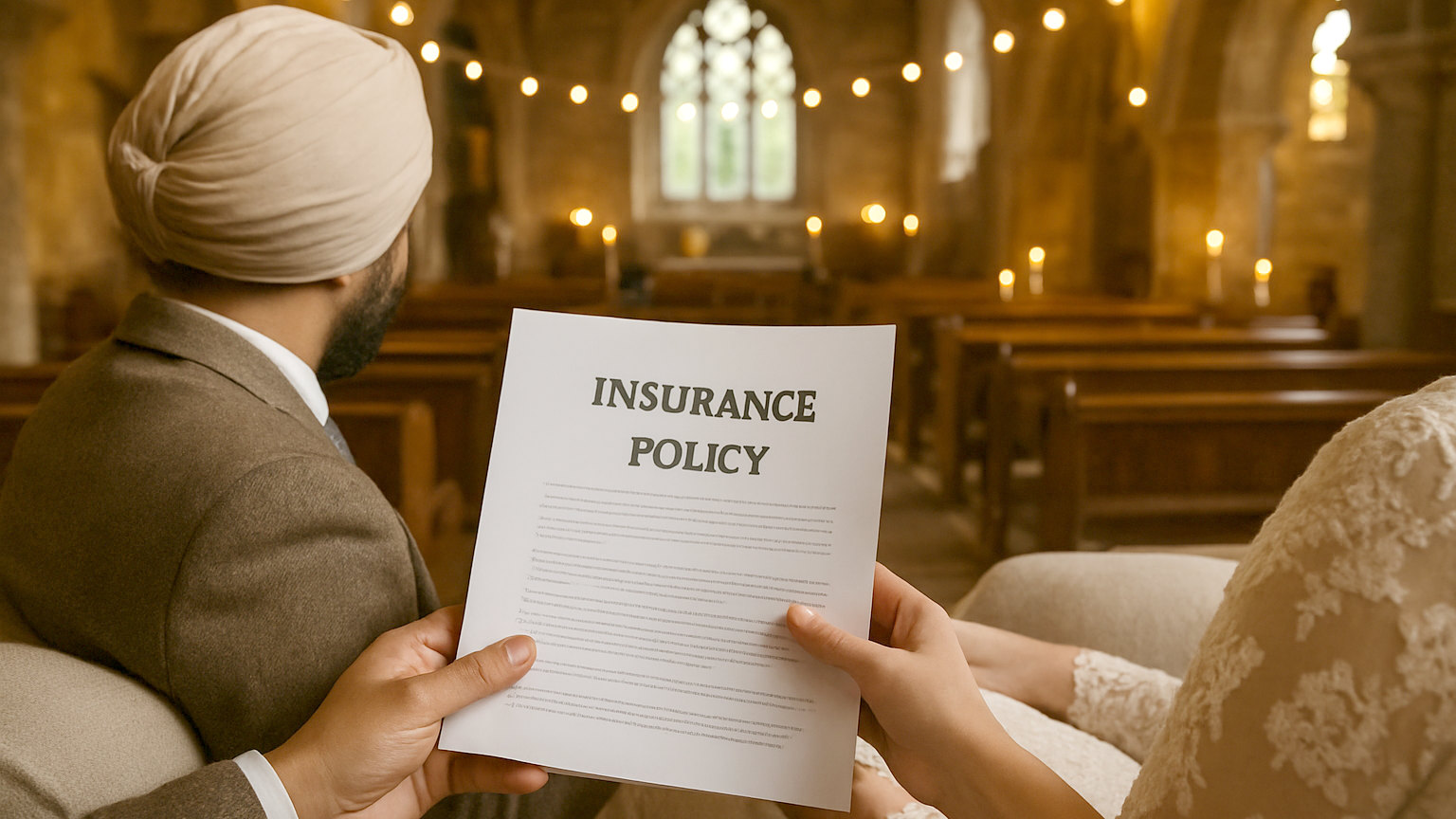
The exclusions in a wedding insurance policy determine its value more than the list of what is covered. Several of them consistently surprise couples, and all of them are considerably better discovered before buying than at the point of claiming.
Is a change of mind covered?
No, and this is universal. Every wedding insurance policy excludes cancellation because one or both of you decided not to proceed, however it is described.
That is not an oversight. Insurance covers events outside your control, and a decision is not one of them.
What about weather?
More limited than people expect. Policies typically cover cancellation only where conditions genuinely prevent the wedding from taking place or make the venue inaccessible, not where the weather is simply poor.
Rain on an outdoor wedding is not a covered event. A flooded venue or roads made impassable may be, subject to the wording. Check what threshold the policy applies.
Are known circumstances excluded?
Yes, and this is the exclusion that catches most people. Anything already known about when the policy was taken out is generally excluded, including a supplier already in difficulty or a health condition already diagnosed.
It is the reason cover should be arranged as soon as the first deposit is paid rather than when a problem appears.
What about communicable disease?
Commonly excluded now across the market, and this changed substantially after 2020. Do not assume cover for cancellation or restriction arising from an outbreak or public health measures.
Where any cover exists it is likely to be narrow and conditional. This is a section worth reading in full rather than skimming.
Are pre existing conditions covered?
Generally not, unless declared and specifically accepted. Cancellation cover for illness normally applies to conditions that arise after the policy starts.
If somebody central to the wedding has a known condition, disclose it and ask directly whether cover applies. An undisclosed condition is a common reason for a declined claim.
What else is typically excluded?
Anything you could have recovered elsewhere, since policies commonly exclude losses already covered by another policy or by a supplier refund. Consequential losses beyond the sums insured. Anything arising from your own failure to pay a supplier.
Honeymoons are usually outside a wedding policy entirely and need travel insurance separately.
Are there limits within the cover?
Always, and they matter. Each section carries its own limit, so a policy with a generous headline figure may still have a low sub limit on rings, gifts or attire.
Check the individual sub limits against what you are actually insuring rather than relying on the total.
What should you do about the exclusions?
Read them before buying, and choose a policy on the basis of the exclusions rather than the price. Two policies at similar cost can differ substantially in what they will actually pay for.
Nothing here is financial advice and no particular product is recommended. Ask the insurer directly about anything unclear, check they are authorised on the Financial Conduct Authority register, and use MoneyHelper for free impartial guidance.
Are suppliers you paid in cash covered?
Frequently not, since most policies require a written contract and evidence of payment. A booking made informally with no paperwork sits outside cover at almost every insurer.
Get a contract and a receipt from everybody, however small the booking. It costs nothing and it is a condition of most claims rather than a formality.
What about things you were responsible for?
Losses arising from your own failure to do something are generally excluded. Not paying a supplier on time, not meeting a condition in a contract, or not notifying the insurer within the required period all fall into this category.
That last one is worth noting specifically, since late notification is among the most common reasons an otherwise valid claim is reduced.
Read the exclusions before the cover summary. It is the section that decides whether a policy is any use to you, and it is the section almost nobody opens until something has already gone wrong.


