
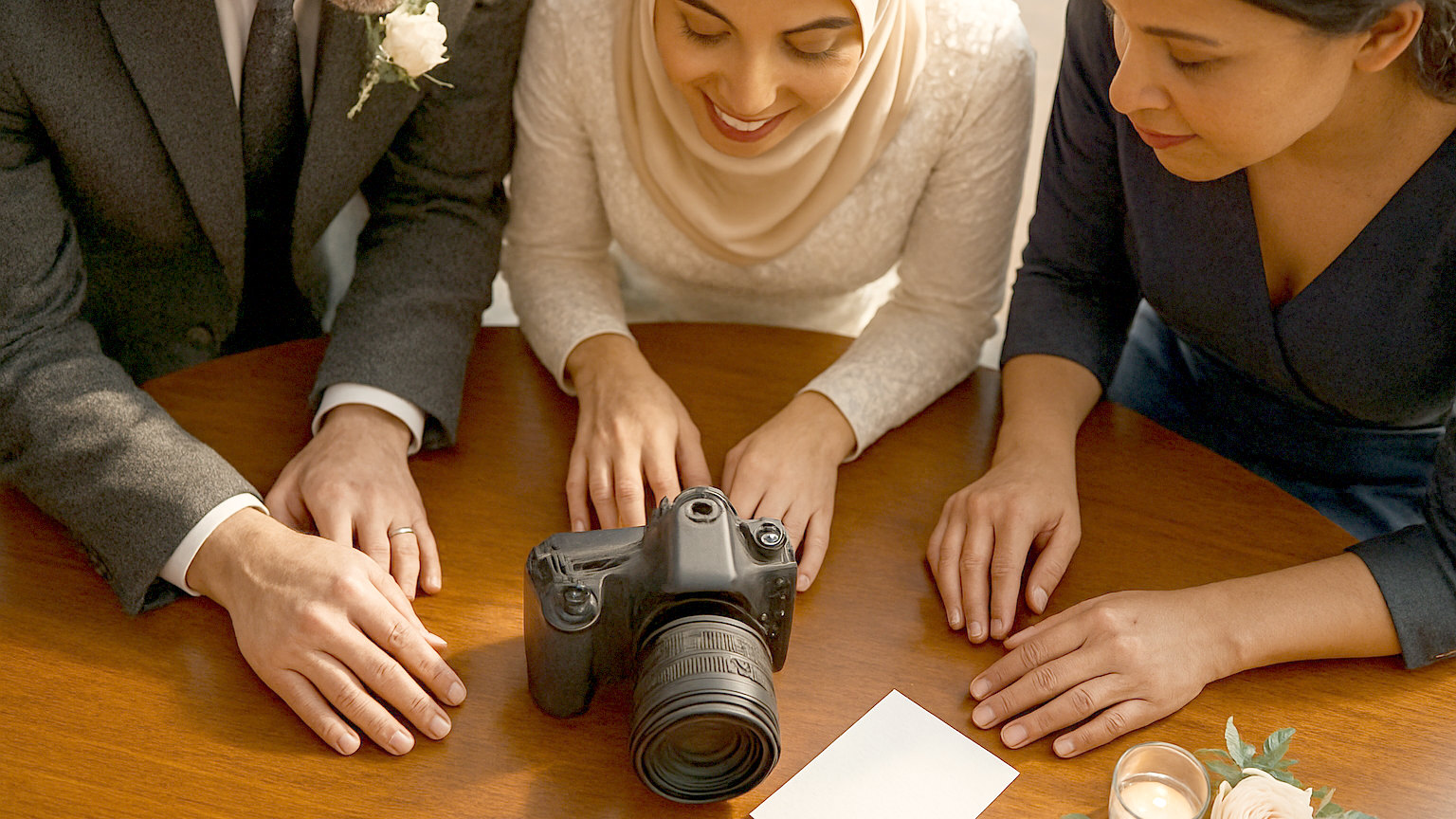
Wedding videography in the United Kingdom commonly costs around £1,300, with a range broadly similar to photography running from a few hundred pounds to several thousand. It is the category most frequently cut when a budget tightens.
What does the price buy?
Coverage on the day, then a considerable amount of editing. A highlight film of five to ten minutes typically takes many hours to cut, and that editing time is most of what you are paying for.
Longer packages include a full ceremony edit, speeches in full, and sometimes a documentary length film covering the whole day.
What are the usual package levels?
At the lower end, a short highlight film with limited coverage. In the middle, most of the day covered with a highlight film plus the ceremony and speeches in full. At the upper end, two operators, drone footage where permitted and a longer film.
Two operators makes a real difference at a wedding, because a single videographer cannot cover both the ceremony and the reactions to it.
How does it compare with photography?
Similar money for a different thing. Photography gives you several hundred images you will look at repeatedly. Video gives you sound and movement, which is the part photographs cannot capture.
What people most often say they value about video is the voices. Speeches, vows and the sound of relatives who may not be there in twenty years are the things that cannot be recovered afterwards.
Is it worth the money?
It is the most genuinely optional of the major supplier categories, and opinions divide sharply. Some couples describe it as the best money they spent and others never watch the film after the first month.
A reasonable test is whether you watch video generally. People who rewatch things tend to rewatch their wedding film, and people who do not, do not.
What is the cheaper option?
A shorter package covering the ceremony and speeches only. That captures the irreplaceable parts, which is the sound, and costs considerably less than full day coverage.
Some photographers offer short films as an add on, which is cheaper again and avoids having a second supplier to coordinate.
What should you check before booking?
How long delivery takes, which is commonly three to six months and occasionally longer. What format you receive. Whether the raw footage is available and at what cost. Whether they have worked at your venue.
Also check how they work alongside a photographer, since the two are covering the same moments and a poor relationship between them is visible in both sets of results.
What about drones?
Common as an add on and subject to real restrictions. Operators must be appropriately qualified and registered, and many venues prohibit drones outright for privacy, noise or airspace reasons.
Confirm with the venue before paying for it. A drone package bought for a venue that does not permit them is money spent on nothing.
Where does it sit in the budget?
Photography and videography together account for around ten to twelve per cent of a typical British wedding budget, so adding video to a wedding that has already budgeted for photography is a genuine increase rather than a redistribution.
If it matters to you, fund it by naming what gives way. If it does not, it is among the least regretted omissions at any wedding, since nobody misses a film they never planned to have.
How does it work alongside photography?
Well, if both suppliers know the other is coming. Tell each of them at the point of booking, since the two are covering the same moments and need to agree how they will work.
Where a photographer and videographer have worked together before, it shows in both sets of results. Ask each whether they can recommend the other, which frequently produces a better pairing than choosing independently.
When should you book?
At the same time as the photographer, since good videographers book as far ahead. Deciding late usually means choosing from whoever is left rather than from whose work you like.


