
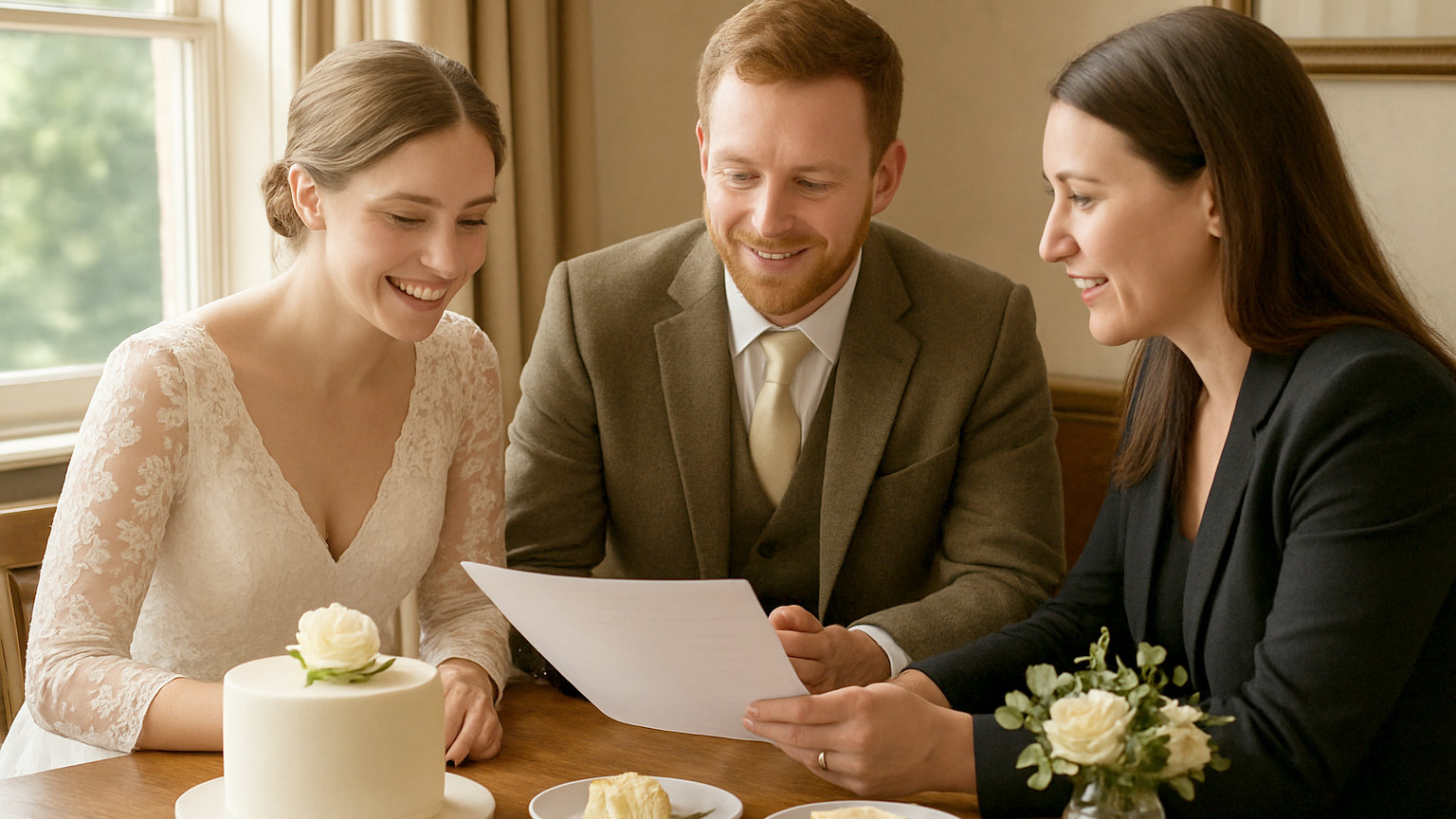
Wedding cakes in the United Kingdom range from under £200 for something simple to well over £1,000 for a large decorated cake from an established maker. The variation is driven by decoration and labour far more than by ingredients.
What drives the price?
Hours of decorating work, above everything. Sugar flowers, hand piping, intricate icing and anything sculpted takes a skilled person a long time, and that time is what you are buying.
Number of tiers matters too, though less than people assume. A larger plain cake is frequently cheaper than a smaller heavily decorated one.
How many tiers do you need?
Fewer than most couples order. A three tier cake serves considerably more people than a typical wedding needs, particularly where the cake is served as evening food rather than as dessert.
Ask the maker how many portions each size produces and buy for your actual numbers. Cake is the item most frequently over ordered at weddings, and a substantial proportion goes home uneaten.
What is a dummy tier?
A polystyrene tier iced to match, used to give height without the cost or the waste. Widely used and entirely invisible.
A two tier cake with one dummy tier costs meaningfully less than three real tiers and photographs identically, which makes it one of the easier savings available.
What is a cake cutting fee?
A charge some venues apply for cutting and serving a cake supplied by an outside baker, commonly quoted at £1 to £7 per guest.
At a hundred and fifty guests that is potentially several hundred pounds on top of the cake itself. Ask about it before ordering, because it is one of the more irritating charges to discover late.
What are the alternatives?
A cheese tower, which doubles as evening food and removes the dessert question. Cupcakes or a dessert table. A single tier cutting cake with sheet cakes served from the kitchen, which is what many venues do anyway.
A supermarket cake decorated with fresh flowers is a genuinely popular option and costs a fraction of a bespoke one. Nobody can tell once it is cut.
Does the cake have to be dessert?
No, and increasingly it is not. Where the caterer is serving a proper dessert, the cake is usually cut for the photograph and served later in the evening, which means it needs to feed fewer people than the guest list.
Decide which it is before ordering, since the two require quite different quantities and the difference is money.
What else gets charged?
The stand and the knife, which are usually hired rather than included and cost twenty to sixty pounds. Delivery and set up, particularly for a tiered cake that has to be assembled on site.
Neither is large and both are routinely absent from first draft budgets, which is why cake commonly comes in above the figure recorded for it.
When should it be ordered?
The maker should be booked around six months out because the date is the scarce resource, and the design settled around six weeks out when the styling is decided.
The cake itself is baked in the final days, so the production lead time is short. It is the diary rather than the baking that requires early attention.
How do you brief a cake maker?
With a rough style, a colour, the number of portions needed and the budget. Flavours can be settled at a tasting later, and most makers offer one.
Send two or three reference images rather than twenty. As with flowers, a maker given a feeling and a budget produces better value than one working to a precise reproduction of somebody else work.
Who collects it?
Establish this early. Many makers deliver and assemble on site, which is included in some quotes and charged in others. A tiered cake transported by a guest in a car is a well known way to lose a cake.


