
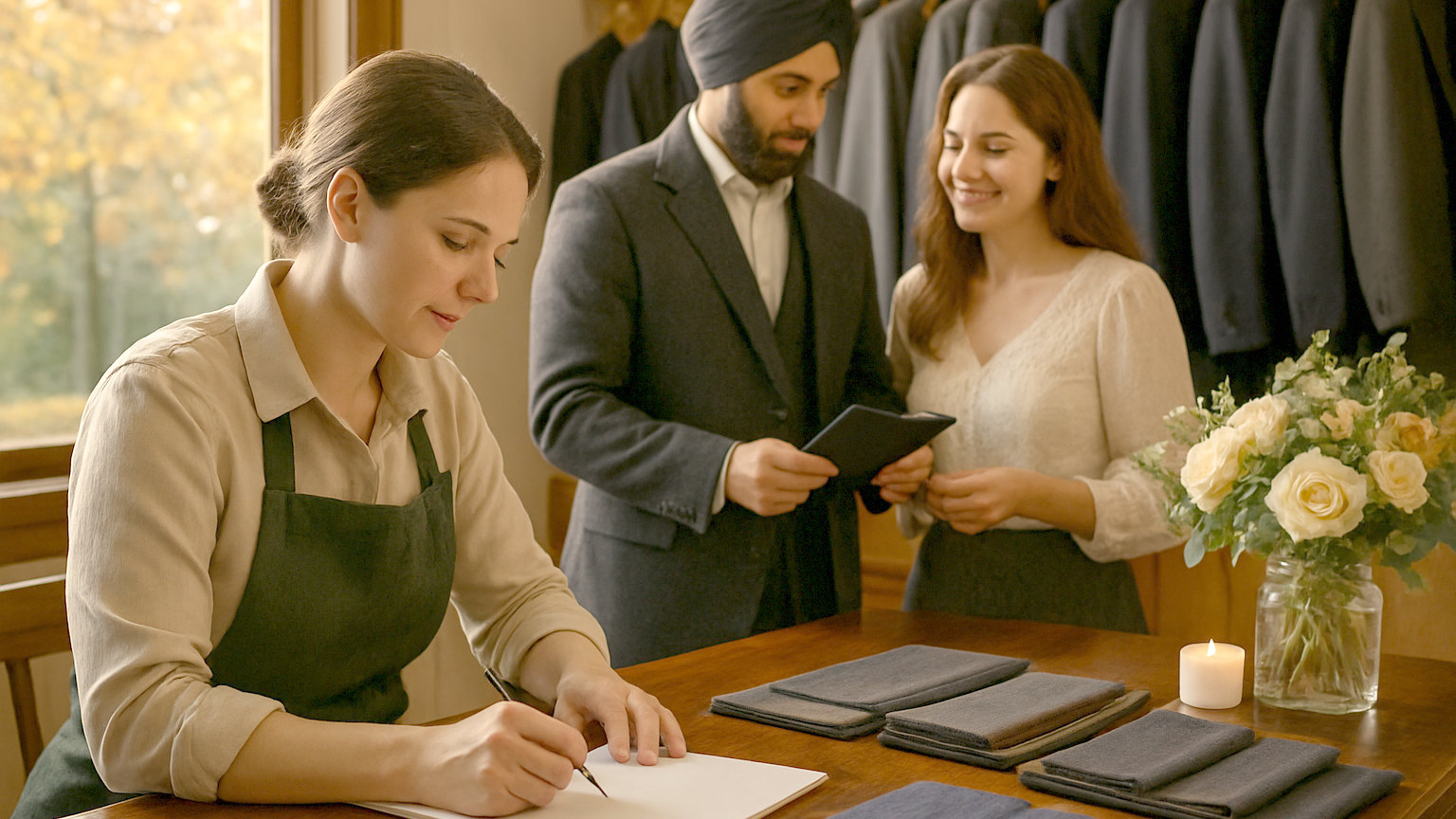
Menswear is one of the smallest lines in most wedding budgets and one of the most variable. Grooms typically spend £300 to £600 on an outfit, whether bought or hired, which is a fraction of the equivalent figure for a dress.
What does hiring cost?
Commonly £100 to £200 per person for a suit, shirt, waistcoat and accessories, with morning dress at the upper end. Group discounts are usual where several people hire together.
Hire suits everybody who wants a formal look for one day without owning it, and it removes the fitting and storage problems entirely. It also removes the possibility of wearing it again.
What does buying cost?
A high street suit runs from around £150 to £400 and a better quality off the peg suit £400 to £800. At that level you own something wearable afterwards, which changes the value considerably.
For a groom, buying is frequently better value than hiring once you account for wearing it again. For five groomsmen who will not, hire is usually the sensible answer.
What does made to measure cost?
Commonly £600 to £1,200, with full bespoke tailoring considerably above that. The difference is fit, which is genuinely visible in photographs and is the main argument for it.
Lead time is the constraint. Made to measure typically needs eight to twelve weeks including fittings, so it belongs at around three months rather than in the final rush.
What gets added on top?
Shoes, which are frequently forgotten and cost £80 to £200. Shirts, ties, cufflinks and socks. Alterations on an off the peg suit, which usually run £40 to £120 for trousers and jacket adjustments.
None of these are large individually and together they add two to three hundred pounds to a figure that was recorded as the suit price.
Who pays for the wedding party?
Traditionally each person pays for their own, and a growing number of couples contribute or cover it entirely. There is no correct answer and it should be settled before anybody is asked.
Say what the cost will be at the point you ask people. It is a significant sum for some of them and it lets anybody decline at the point where declining is easy.
Do the outfits have to match?
No, and coordinating rather than matching usually looks better and costs less. A shared colour with different suits allows people to wear something they already own.
That approach also removes the coordination problem of five people hiring from the same shop by the same date, which is a genuine administrative job in the final month.
How does the season affect it?
Fabric weight matters more than the price. A heavy wool suit at a July wedding is uncomfortable and shows in photographs, and a linen suit in February looks wrong.
Ask about fabric weight when hiring or buying. It costs nothing to specify and it is the difference between a comfortable day and a difficult one.
When should it be arranged?
Around three months out for hire and made to measure, and any time for off the peg. This is one of the genuinely relaxed categories and it does not need to be dealt with early.
What does need doing early is deciding who is paying. That conversation belongs at the point people are asked to be involved, not in the month before the wedding when the invoices arrive.
What does hire include?
Usually the suit, shirt, waistcoat, tie and sometimes shoes, for a period covering the wedding and a day or two either side. Late returns attract charges, so somebody has to be responsible for getting everything back.
Assign that job in advance. Collecting and returning five hired outfits is a real task and it lands on the day after the wedding, when nobody has planned to do anything.
What about damage?
Hire agreements commonly include a damage waiver or charge for repairs, and weddings are hard on clothing. Read what the agreement says about stains and tears before signing for five people.


