
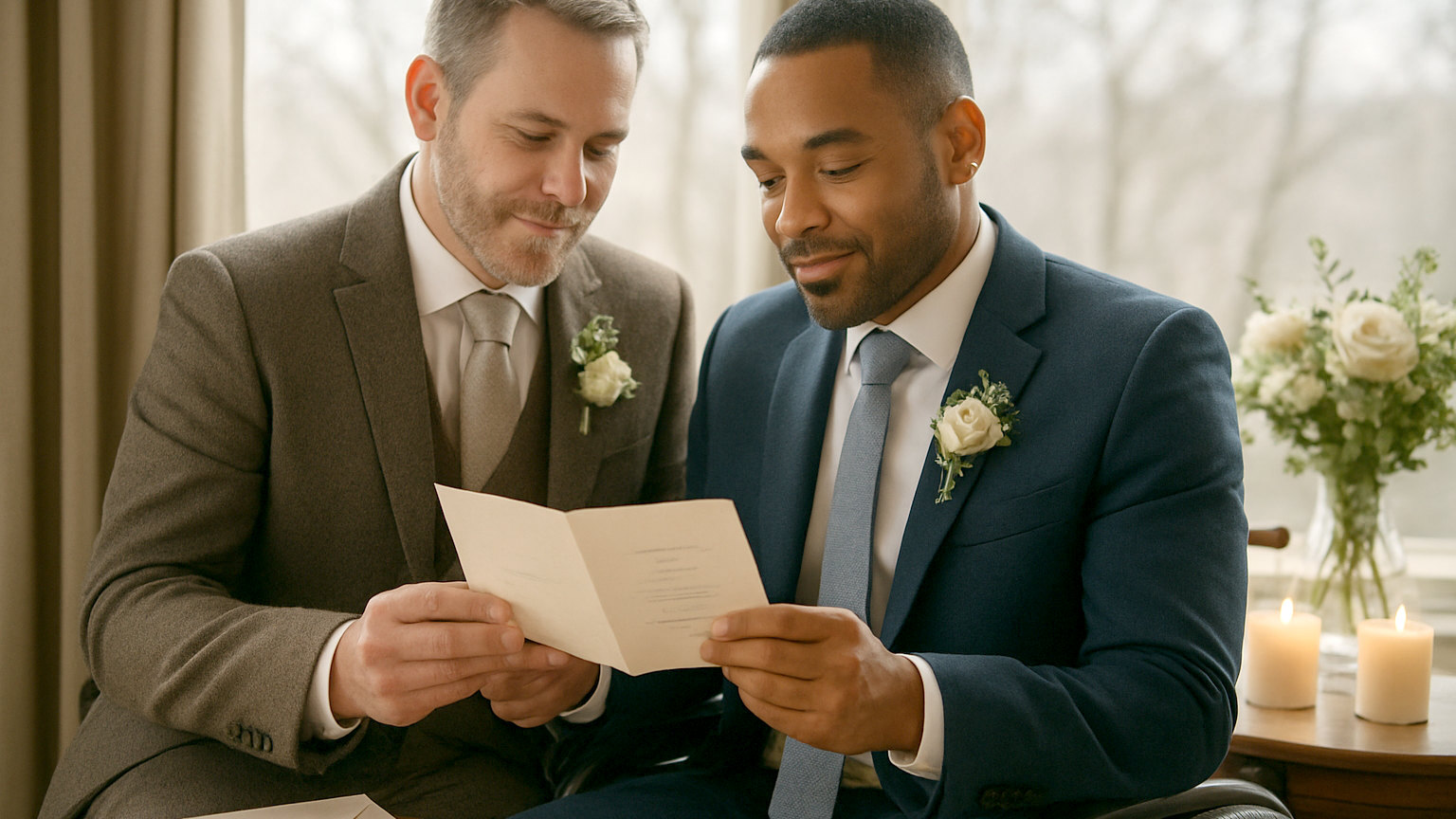
Wedding stationery across the whole suite commonly costs between £200 and £800, covering save the dates, invitations, on the day items and thank you cards. It is a small line that reliably comes in above its estimate, usually because of postage.
What is in a full suite?
Save the dates, invitations with any inserts, reply cards, order of service, menus, place cards, a table plan, table numbers and thank you cards.
Most couples buy some of these and not others. On the day items in particular are frequently reduced or dropped without anybody noticing.
What drives the price?
Print method and finish. Digital printing is the cheapest. Letterpress, foiling, embossing, hand finishing, envelope liners and wax seals each add substantially, and several together can double a quote.
Paper weight and any custom design work are the other factors. A design created from scratch costs more than a template with your details applied.
What does postage cost?
More than people expect and it is the line most often forgotten. A hundred households at standard letter rates is a meaningful sum, and heavier or larger invitations push into a higher postage band.
Weigh a finished invitation before buying stamps. A square envelope or one exceeding the standard thickness costs noticeably more to post, and that applies to every one of them.
How do you reduce it?
Send to households rather than individuals, which cuts the number substantially. Use a wedding website for the detail rather than printed inserts. Skip reply cards and take replies online.
Digital save the dates are entirely acceptable and remove a whole round of printing and postage. A save the date is functional rather than ceremonial and its job is to get a date into a diary.
What can be done at home?
A good deal, and this is one of the few categories where doing it yourself genuinely saves money without much risk. Printing at home, assembling, and hand writing names all work.
Be realistic about the time. Addressing a hundred envelopes takes an evening, and assembling anything with multiple pieces takes longer than it looks.
How long does it take?
The printing is usually two to three weeks. The design and proofing cycle is what takes the time, involving at least two rounds of corrections and frequently three, because names and titles are always wrong the first time.
Allow six to eight weeks from first contact to invitations in hand for anything bespoke, and more for foiling or hand finishing.
What about on the day stationery?
It depends on final numbers, which means it cannot be produced until the replies are in. Table plans, place cards and menus all wait for that.
Work backwards from the item with the longest lead time. If a table plan takes two weeks to make, the seating has to be final three weeks out, which sets your reply date.
Is it worth spending on?
The invitation is the first impression guests have of the wedding, which is the argument for it, and it is also thrown away within a fortnight by most of them.
It is a reasonable place to economise if the budget is tight, and a reasonable place to spend if stationery is something you care about. What it should not be is a category that quietly costs six hundred pounds because nobody was counting.
Should everything match?
It costs more and nobody compares. Save the dates and invitations arrive months apart and on the day stationery is seen in a different context entirely.
A matched suite is worth buying if stationery matters to you and is not worth waiting for. Couples who delay sending a save the date because the full design is unfinished frequently end up sending it too late to be useful.
What is worth spending on?
The invitation, if anything, since it is the one piece guests handle properly. On the day items are looked at once and thrown away, and are the safest place to economise.


