
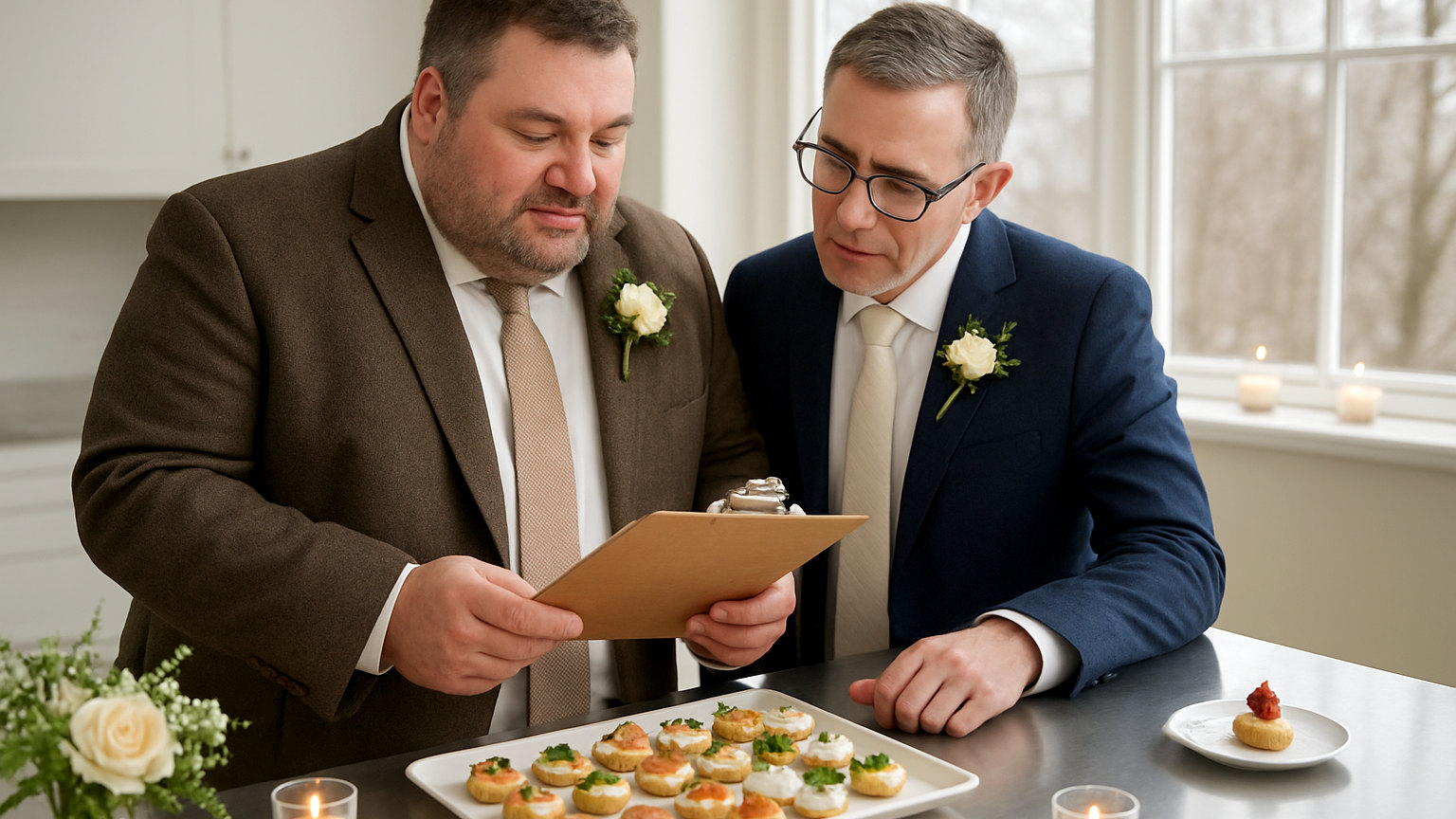
Wedding catering in the United Kingdom commonly runs between £35 and £120 per head in 2026, with mid range caterers sitting around £50 to £100. It is the largest per head cost at almost every wedding, which makes it the figure that connects the guest list directly to the budget.
What does each level buy?
At the lower end, around £35 to £50, expect a simple format such as a buffet, a barbecue or a single course with limited service. At £50 to £80 a three course plated meal becomes realistic with standard service.
Above £80 you are into better ingredients, more courses, canapes, more staff and a shorter service time, which matters more than people expect at a hundred and fifty guests.
What does an extra guest add?
Roughly £60 to £80 on the catering line alone at a typical British wedding, before drinks, stationery and a place setting are counted.
That is the number to use when the guest list is being discussed. A table of ten is somewhere between one and two thousand pounds once everything is included, which is a considerably more useful framing than arguing about individuals.
Which formats cost least?
A barbecue or hog roast commonly runs £15 to £40 per head and suits outdoor and barn venues well. Street food stalls are often quoted as a full service figure of £500 to £2,000 rather than per head.
A long lunch costs less than a formal dinner. Sharing platters cost less than plated service. Two courses cost less than three. All of these keep the food good while reducing the figure, which is the distinction that matters.
Is a buffet actually cheaper?
Sometimes, and less often than people assume. A buffet reduces service staff and can reduce food cost, but caterers frequently prepare more food per head because portion control is harder.
At large numbers a buffet is also slower once queuing is counted, so the saving may be modest. Ask for both quoted and compare rather than assuming.
What is added to the headline figure?
Service charges, which are commonly a percentage on top. VAT, where the quoted figure excludes it. Staffing, if quoted separately. Hire of crockery, glassware and linen at dry hire venues. Cake cutting fees, which some venues charge at £1 to £7 per guest.
Supplier meals are the item most often forgotten. Photographers, videographers and bands are contractually entitled to a meal at most weddings and go into the headcount at full or reduced rate.
Does the venue affect the price?
Substantially. Venues with exclusive caterers remove your ability to compare quotes, which is the single most important thing to establish before booking a room.
Dry hire venues let you choose freely and add hire costs for everything the venue does not own, which frequently cancels out much of the saving. Price both properly rather than assuming either is cheaper.
What about evening food?
A separate cost, commonly £8 to £20 per head, and frequently left out of first draft budgets entirely. Numbers are usually higher than the meal because evening guests arrive.
It is one of the easier things to simplify. Bacon rolls, pizza or a cheese table cost a fraction of a second catered service and are generally more popular at ten in the evening.
How do you compare two catering quotes?
Convert both to a full cost per head including service, VAT, staffing, hire and evening food. Two quotes that differ by twenty pounds a head at the top frequently differ by five once everything is added.
Then check the number of staff, since that determines how long service takes. A cheaper quote with half the staff produces a meal that runs forty minutes longer, which comes out of your evening.
What should you ask before booking?
Whether the figure includes VAT and service, how many staff will attend, how long service will take for your numbers, and what happens about dietary requirements and children.
Children are commonly charged at a reduced rate and sometimes at full price, which at a wedding with fifteen under twelves is a difference worth establishing early.


