
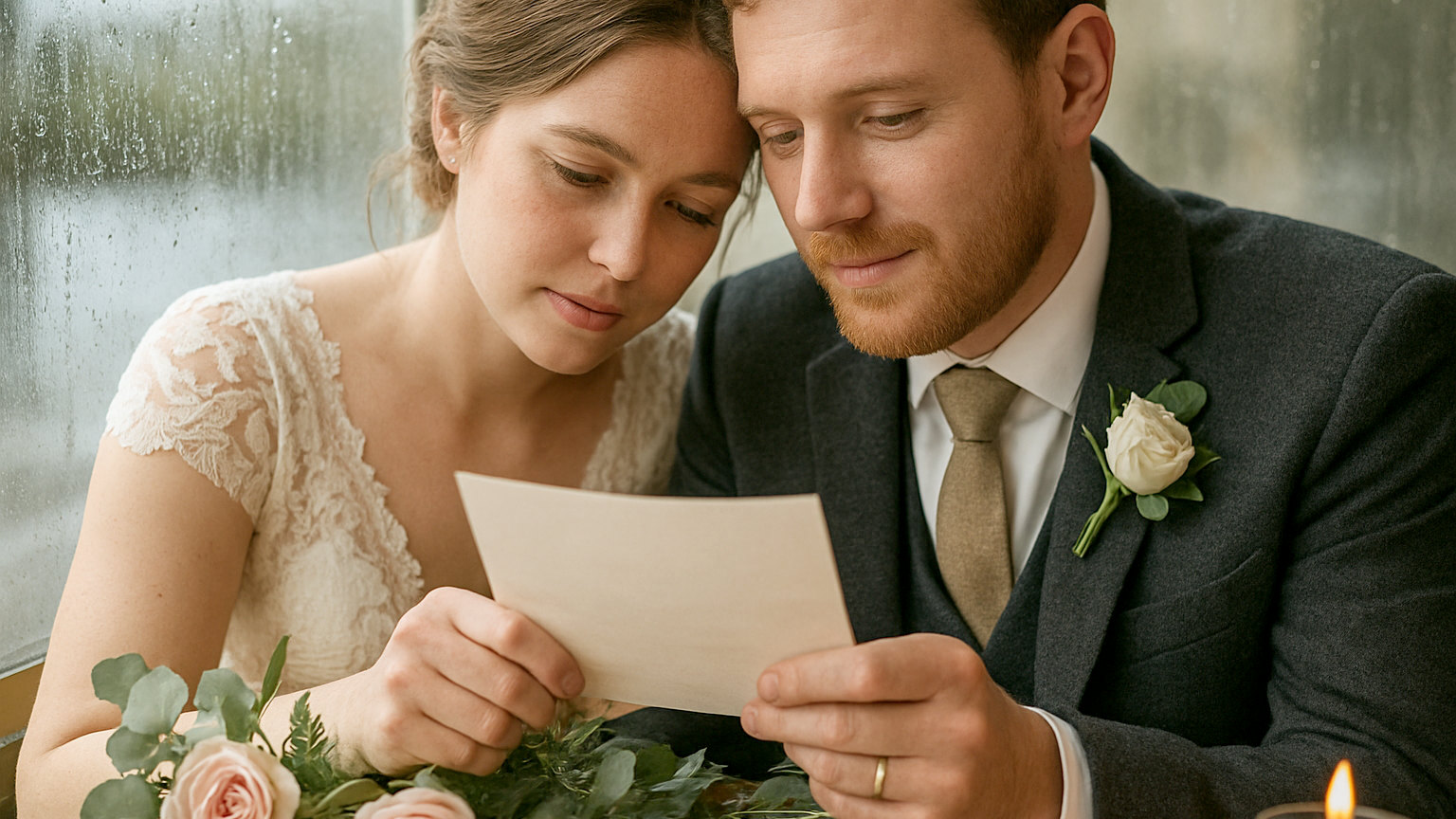
Wedding flowers in the United Kingdom commonly cost between £500 and £2,500, with a basic package at the lower end and more elaborate venue work above it. The figure surprises couples because the cost is driven by labour and volume rather than by the flowers themselves.
What do the personal flowers cost?
A bridal bouquet with bridesmaid bouquets commonly runs £300 to £700 combined. Buttonholes are usually a few pounds each and corsages slightly more.
These are the smallest part of most floral budgets and the part couples think of first, which is why the total quote often comes as a surprise.
What does venue flowering cost?
Anywhere from £1,000 to £3,500 for arrangements, table centres and aisle dressing at a typical wedding, and considerably more for large installations.
An arch, an installation over a doorway or anything suspended requires structure, ladders, time and frequently two people, which is why a large piece can cost several times a bouquet made of the same flowers.
Why is labour the main cost?
Because flowers have to be sourced, conditioned, arranged, transported and installed, and most of that happens in the twenty four hours before the wedding.
A florist quoting for a wedding is quoting for a working day or more, plus staff, plus delivery and collection. The stems are a minority of the figure at almost every price level.
How much difference does the season make?
A great deal. Flowers in season locally cost a fraction of the same variety imported out of season, and using available seasonal stock can reduce a decoration budget by thirty to forty per cent.
Peonies outside late spring and lily of the valley outside a short window are the two that most often cause disappointment. Winter weddings using imported blooms cost noticeably more than the same brief in June.
What reduces the cost most?
Giving the florist freedom to choose what is good that week rather than specifying varieties. A brief by colour and feeling produces more for the money than a fixed list.
Weighting the brief towards foliage is the second lever. Greenery is considerably cheaper by volume than flowers and does most of the visual work in the loose abundant style that is currently popular.
Can flowers be reused?
Yes, and it is one of the few genuine savings available. Ceremony arrangements can be moved to the reception during the drinks, and a pedestal can become a table centre.
It has to be arranged in advance because somebody has to be there to do it, and it needs to be in the quote and the schedule rather than mentioned on the day.
What about faux and dried flowers?
Good quality faux flowers are convincing at a distance and are increasingly used for large installations that would otherwise be unaffordable. They cost more per stem and can be hired, which changes the arithmetic for anything structural.
Dried flowers have become widely used and cost less than fresh for equivalent volume, with the advantage that they can be prepared well in advance.
What should the quote break down?
Each item separately with a price against it, plus delivery, set up, collection and hire of any vessels or structures. Collection is a real cost and is sometimes charged separately.
An itemised quote is what lets you cut sensibly if the total is too high. A single figure for wedding flowers gives you nothing to work with except asking for a discount, which rarely produces much.
Is there a minimum spend?
Many florists have one, commonly several hundred pounds, and it is the question that resolves most enquiries quickly. Ask it in the first message rather than after two exchanges about style.
Below the minimum, a local florist doing bouquets and buttonholes only, or a supermarket order arranged yourself, is frequently the more sensible route and produces a perfectly good result.
What happens to them afterwards?
Most arrangements are thrown away, which surprises couples who have not thought about it. Many florists are happy for guests to take table centres home, and some will help arrange for flowers to go to a local hospice or care home.


