
Wedding advice is full of things to make yourself, and most of them save under a hundred pounds for a weekend of work. A small number save a genuinely useful amount. The distinction is worth drawing before anybody buys a glue gun.
What makes DIY worth it?
Three conditions together. The bought version is expensive relative to the materials, the work can be done well in advance, and a mistake is recoverable. Anything failing all three is usually a false economy.
The fourth consideration is whether you would enjoy it. Making something for your own wedding is a legitimate pleasure and does not have to be justified financially.
What genuinely saves money?
Drink, where the venue permits it and corkage is low. Supplying your own wine and beer instead of a venue package can save several hundred pounds or more at a wedding of a hundred.
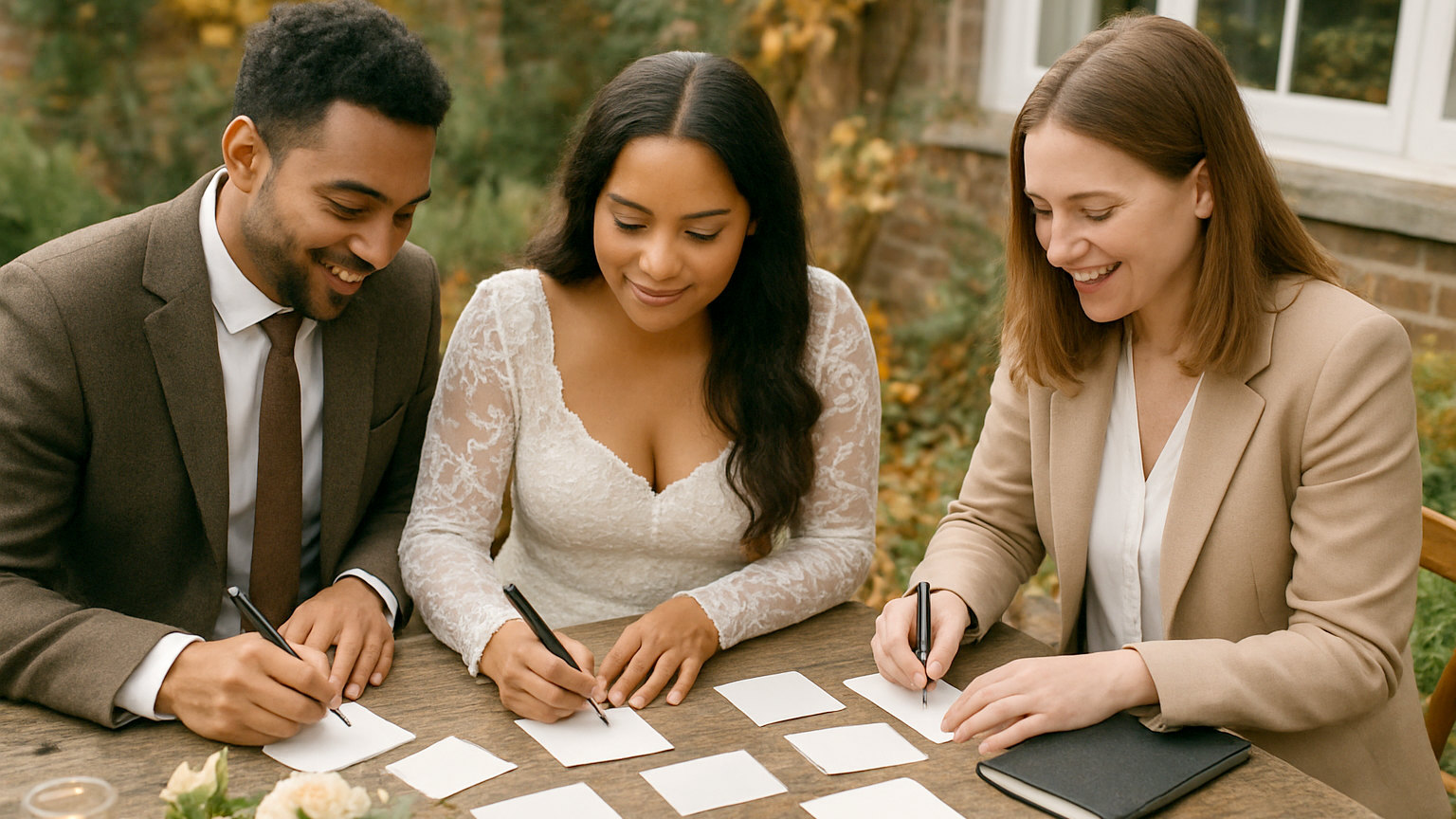
Stationery is the second, since the materials cost a fraction of a printed suite and home printing is genuinely acceptable now. Music, if you build playlists and hire a sound system instead of a DJ, is the third.
What saves a moderate amount?
Table styling, signage, favours and a guest book. Each saves perhaps fifty to two hundred pounds, which is real money and requires time and storage.
Do these only if you want to. The saving is not large enough to justify the work on financial grounds alone, and storage across a long engagement means changing your mind.
What is rarely worth it?
Anything requiring a skill you do not have, anything perishable, and anything that has to happen in the final week. Flowers are the clearest example, since they must be arranged within a day or two of the wedding and that day is already full.
Cake is similar. Baking and decorating a tiered cake is a serious undertaking, it has to happen immediately beforehand, and transporting it is where most attempts fail.
What should never be done yourself?
Photography, unless somebody genuinely qualified is offering. It cannot be repeated, the friend concerned will not enjoy the wedding, and the results are the one part of the day you keep.
The same applies to anything a guest would have to work through. Asking somebody to serve, drive or coordinate means they are not attending the wedding, which is a real cost even when no money changes hands.
How do you cost it honestly?
Materials, plus transport to buy them, plus the hours. Give the hours a value, even a modest one, and a good many projects stop looking like savings.
Then add storage and the risk of doing it twice. A first attempt that is not good enough is common, and the second attempt costs the materials again.
When should it be done?
Anything makeable should be finished by four weeks out. The final month has no capacity for craft projects and the ones left until then are the ones that cause stress.
Anything perishable or assembled on the day should be somebody else task entirely, briefed in advance, with the materials handed over the week before.
What is the sensible approach?
Pick two projects at most, chosen because you want to make them, and buy everything else. Couples who take on eight arrive at the final month with four unfinished and no time.
The largest savings in a wedding are the date, the day of the week and the guest list, none of which require a craft knife. Doing those first means the DIY can be a pleasure rather than a financial necessity.
Who should actually do it?
Not the two of you in the final month. Anything makeable should either be finished early or handed to somebody who has offered and been given clear instructions.
People who want to help are frequently much better at this than they are at vaguer forms of assistance. A bounded making task with a deadline is a genuinely good thing to give somebody.
What is the honest test?
Whether you would do it if it saved nothing. If the answer is yes, make it and enjoy it. If the answer is no, price the hours and compare against moving the date, which will almost always win.


