
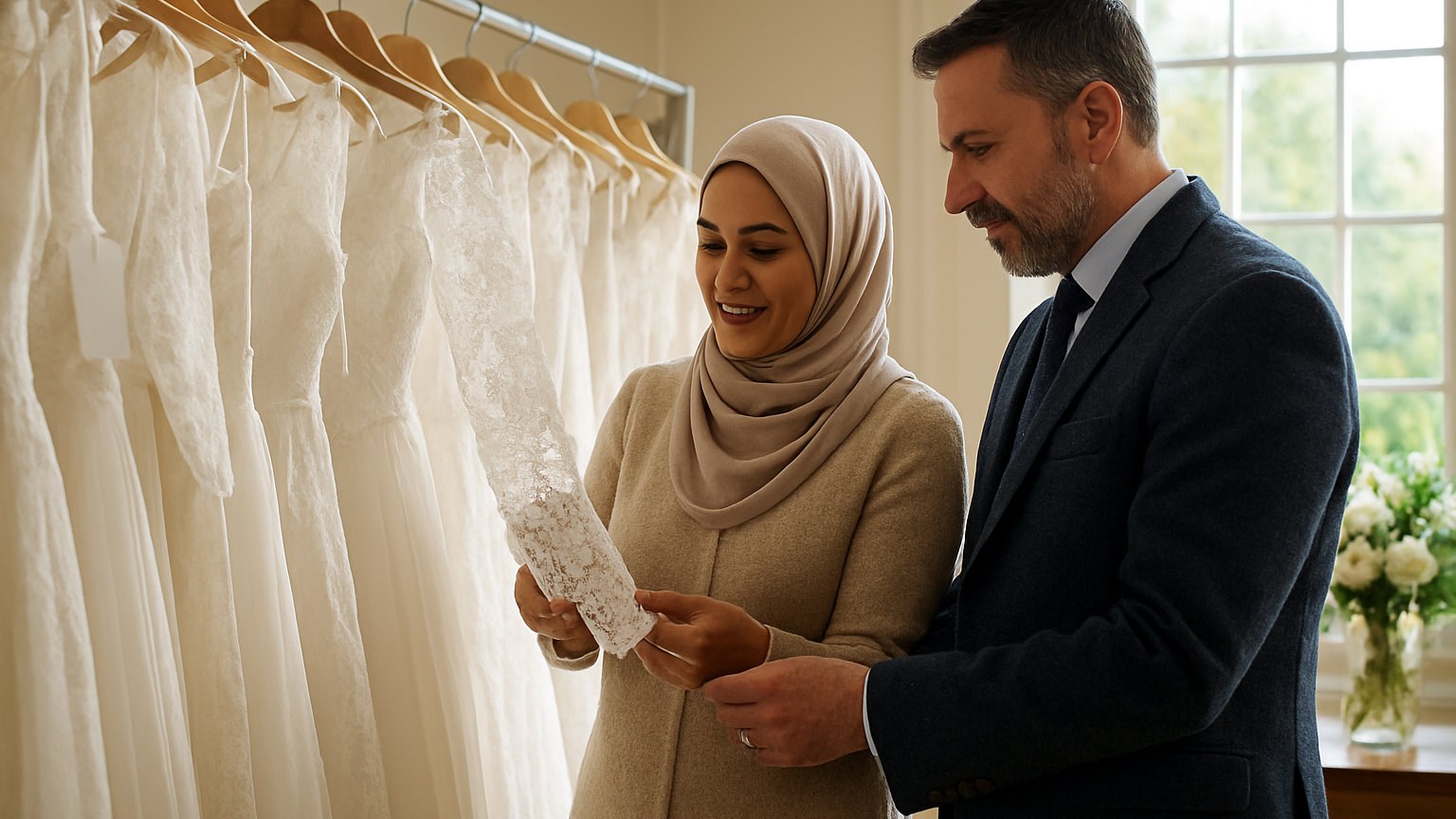
Most British brides spend between £1,200 and £2,000 on a dress, and there are several routes to the same result for considerably less. What should not be economised on is the one part most couples leave out of the budget entirely.
What are the cheaper routes?
Sample dresses from the shop floor, heavily reduced and available immediately. Second hand and once worn dresses, widely sold and frequently as new. Off the peg dresses bought from stock. High street bridal ranges, which are considerably cheaper again.
None of these is a lesser version of the same thing. They are the same garments bought through a faster and cheaper route, and no guest has ever been able to tell.
How do sample sales work?
Boutiques clear stock at intervals, usually when collections change, at substantial reductions. The dresses have been tried on and may need cleaning or minor repair, which is factored into the price.
Sizing is the constraint, since you are buying what exists rather than ordering. Go with an open mind and be prepared for the dress to be a different one from the one you expected.
Is second hand a real option?
Increasingly, and the market is substantial. A dress worn once for eight hours and professionally cleaned is effectively new, and prices are commonly half or less.
Buy where you can see it in person if possible, and factor in alterations, since a second hand dress was fitted to somebody else and will need work.
What should you not economise on?
Alterations, which commonly run £300 to £600 and are not optional. What shows in photographs is fit, and fit is a function of the fitting rather than the original price.
A well altered dress bought for four hundred pounds photographs better than an unaltered one bought for two thousand. If the budget is tight, spending on the seamstress rather than the label is the better allocation.
What about menswear?
Considerably cheaper throughout. Hire runs £100 to £200 per person, a high street suit £150 to £400, and a suit bought is worn afterwards, which changes the value entirely.
For a groom, buying is frequently better value than hiring. For five groomsmen who will not wear it again, hire usually wins.
How do you handle the wedding party?
Coordinating rather than matching costs less and usually looks better. A shared colour with different garments lets people wear something they already own or buy something they will use again.
It also removes the coordination problem of five people hiring from the same shop by the same date, which is a genuine administrative job in the final month.
What gets forgotten?
Shoes, underwear, jewellery and a veil, which together commonly add £200 to £800. Shoes in particular have to be present at the first fitting because they set the hem length.
Buying shoes you will wear again, or wearing a pair you already own, is a straightforward saving that nobody sees under a dress.
What is the largest saving available?
Buying outside the bridal market entirely. Evening wear, occasion wear and made to measure from a non bridal tailor all produce garments that photograph beautifully at a fraction of an equivalent bridal label.
The word wedding attached to any product raises its price, and clothing is where that effect is largest. Looking at the same garment without the label is frequently the whole saving.
What about hiring a dress?
An established option now, with several services offering designer dresses for a fraction of the purchase price. It suits anybody who has no intention of keeping the dress afterwards.
Check what alterations are permitted, since a hired dress usually cannot be altered permanently, and fit is what shows in photographs.
When do the savings disappear?
When something is bought without allowing for alterations. A bargain dress that needs six hundred pounds of work is not a bargain, and the alteration cost is broadly the same whatever the dress cost.


