
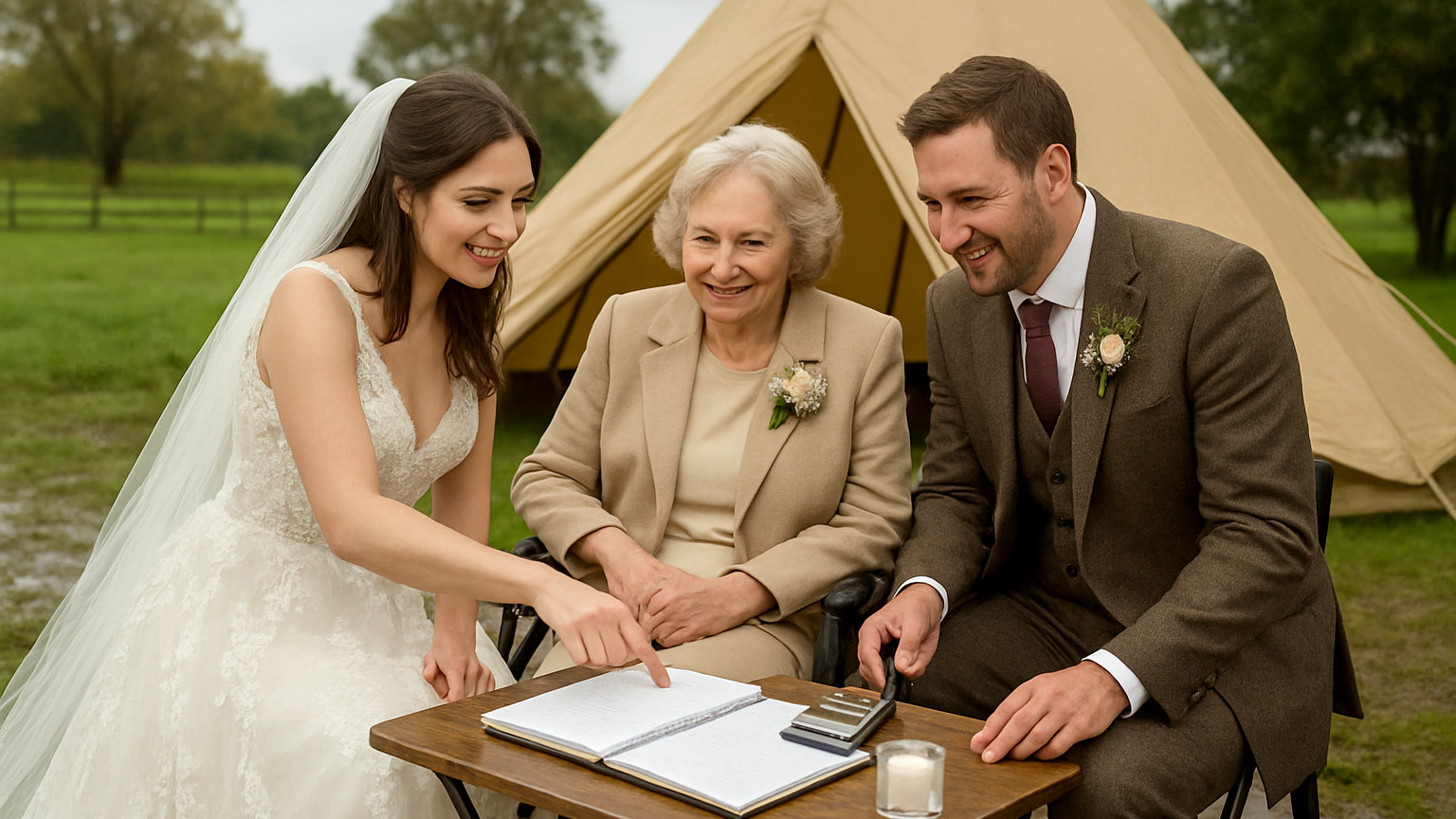
A quarter of couples in Britain spend under ten thousand pounds on their wedding, which makes it an entirely ordinary budget rather than a constrained one. It requires deciding what matters early and being willing to move the date.
What does the money have to cover?
The same categories as any wedding. Venue, food, drink, photography, outfits, flowers, music, stationery and the paperwork. The difference is scale and choice rather than omission.
A workable split might be four thousand on venue and catering, fifteen hundred on photography, twelve hundred on outfits, six hundred on flowers, six hundred on music, and the remainder across everything else with a contingency held back.
What decisions make it work?
Three, and they do most of the heavy lifting. A guest list of around fifty rather than a hundred and twenty. A Friday, Sunday or weekday date. And a month between October and April.
Those three together reduce a twenty thousand pound wedding to around ten without changing a single supplier or lowering the standard of anything.
What kind of venue is realistic?
A village hall, a pub function room, a restaurant with a private space, a small hotel, a community venue or a garden. All of these host weddings well and most have no minimum spend.
Dry hire, where you rent the space and bring in catering, frequently works out cheaper at this level, though it means more organising. Ask specifically about minimum spend in every enquiry, since it is the usual reason a modest budget fails at a conventional wedding venue.
What about food and drink?
Perfectly good, and this is where the format matters more than the money. A long lunch, sharing platters or a hog roast costs considerably less per head than plated dinner service and is frequently more enjoyable.
Supplying your own drink where the venue permits it is the single largest saving available, though corkage can remove most of the advantage. Establish the corkage rate before assuming.
Can you afford a photographer?
Yes, and it is worth protecting. Fifteen hundred pounds buys a competent photographer for most of the day in most of the country, and less buys a shorter booking with somebody early in their career.
Half day coverage covering the ceremony through to the speeches is a sensible compromise. What you lose is the evening, which is the least photographed part of most weddings anyway.
What about the dress and suits?
Off the peg, sample, second hand or high street, all of which look entirely right in photographs. Sample sales and once worn dresses are widely available and frequently as new.
Menswear is easy at this budget. Hire is inexpensive and a suit bought from the high street costs less again and is worn afterwards.
What gets left out?
Volume decoration, favours, elaborate stationery, transport, videography, a large evening band and anything requiring hire in quantity. None of these are noticed in their absence.
What should not be left out is the contingency. Five to ten per cent held back matters more at ten thousand pounds than at thirty, because there is no slack anywhere else.
Does it feel like a smaller wedding?
To you, possibly, during the planning. To guests, almost never. People arrive, are welcomed, are fed, watch a ceremony that means something and dance in the evening, which is the whole of what a wedding is from the outside.
Nobody at any wedding has ever known what it cost, and a great many couples who spent three times this amount would tell you they wish they had spent less.
Where should the money go first?
Food, drink and photography, in that order, and then whatever makes the room comfortable. Guests remember being fed well and being able to sit down, and you keep the photographs.
Everything else can be reduced or removed without any noticeable effect. That is true at every budget and it simply becomes more obvious at this one.


