
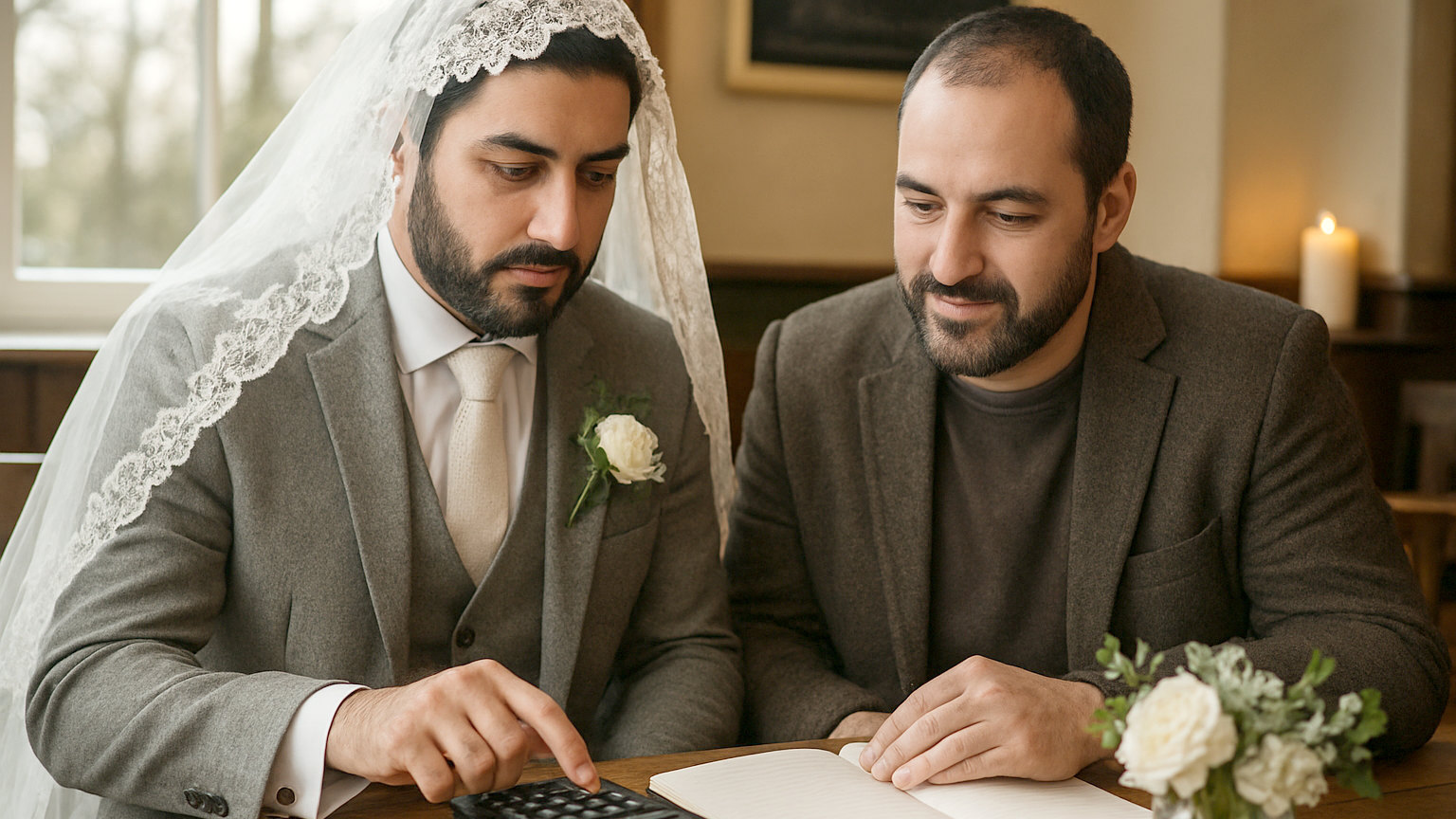
There is no correct amount to spend on a wedding, and the national average is a particularly poor guide because it describes a population rather than a household. The right figure comes from your own circumstances and takes about an hour to work out.
Where should you start?
With what you have and what you can add, not with what things cost. Take current savings you are willing to use, plus what you can genuinely put aside each month between now and the wedding, plus any contribution from family that has actually been confirmed.
That total is your budget. Anything beyond it is borrowing, and borrowing should be a deliberate decision rather than the residue of a plan that grew.
What should you not do?
Start from the average and work down. The figure of around twenty one thousand pounds has no relationship to your income, your savings or your priorities, and using it as an anchor pulls the whole plan towards it.
Also avoid starting from a guest list. A list built without a budget produces a number, and the number is usually one you then have to find rather than one you chose.
How much do families contribute?
More often than people assume. Hitched reports that around sixty one per cent of British couples receive gifted money from family towards the wedding.
Establish what is being offered and whether anything is expected in return before building it into the budget. Money with unstated conditions attached is the most common source of serious family conflict during an engagement.
Should you borrow for a wedding?
It is a decision worth making very deliberately, in advance, with a figure attached, rather than arriving at it incrementally because the budget slipped.
If borrowing is under consideration, National Debtline offer free independent advice on 0808 808 4000. A smaller wedding paid for outright is an option that remains available at every stage of planning.
How long should you save for?
This is the argument for a longer engagement. Eighteen months of saving four hundred pounds a month is over seven thousand pounds, which is a substantial part of a modest wedding.
Open a separate account for it. Wedding money mixed with everyday money becomes invisible, and the single most effective budgeting measure available is being able to see the balance.
What is the sensible test?
Whether you will be comfortable with the figure in three years. Very few couples regret a smaller wedding and a good many regret the debt from a larger one.
Ask what else the money could do. That is not an argument against spending it on a wedding, which is a legitimate thing to want. It is an argument for choosing rather than drifting.
Does spending more produce a better day?
Up to a point that arrives earlier than the industry suggests. Beyond a comfortable venue, good food, enough drink, decent photography and music, additional spending mostly buys elements guests do not notice.
Couples asked afterwards consistently say the same things. They worried about details nobody registered and wished they had spent more time with the people who came.
What figure do most couples land on?
Anything between five thousand and thirty thousand pounds is entirely normal in Britain, with a quarter of couples spending under ten thousand and a quarter over twenty six.
That range is the honest answer to the question. There is no threshold below which a wedding stops working, and the guests at a nine thousand pound wedding have exactly the same day as the guests at a twenty five thousand pound one.
Should the two of you agree a figure separately?
Write down a number each, privately, before discussing it. Couples frequently discover the two figures are further apart than either expected, and finding that out in month one is considerably better than discovering it through a year of small disagreements.
If the gap is large, the conversation to have is about what each of you thinks the wedding is for, not about the number itself.


